San Antonio roofing company
A San Antonio roofing company for hail, heat and roofs past their prime
A roof on a San Antonio house takes spring hail, long summer sun and the odd downburst wind. When a shingle lifts, a tile moves, a stain shows on a ceiling or the whole roof is past its prime, this is a roofing company for owners, landlords and small building owners in San Antonio. Tell us what the roof is doing and where.
Spring hail, summer heat and downburst wind
The NOAA Storm Events Database holds 363 Bexar County hail reports of 1 inch or larger from 1996 to mid-2026, with 158 in April, 91 in May and 61 in March. After a spring storm, a roofer looks at asphalt shingles for the marks the research group IBHS names: dents and tears, which can let water through, and lost granules, which expose the asphalt to ultraviolet light and make it more brittle over time. See hail or wind damage when a storm comes through.
One April storm sits above the rest. The Weather Service calls the April 12, 2016 hailstorm the costliest in San Antonio history, with multiple reports of 2 to 3 inch hail just north of downtown and the largest stones 4.5 inches across. A storm like that can mean a repair in some places and a new roof in others, each decided at the roof.
Heat sits over the city for months at a time: San Antonio International averages 122.4 days a year at 90 degrees or more and 17.7 at 100 or more, and Stinson Airport sits higher with 33.7 days of 100 or more. The shingle makers' association ARMA says excessive heat on a residential roof speeds the aging of roofing materials, raises the attic temperature and may drive heat into the living space. See a roof leak call when a stain shows up.
Freezes are rare: the February 2021 winter storm kept San Antonio at or below freezing for 107 hours straight. Wind reaches the city from thunderstorms and downbursts. The Weather Service page notes a 122 mph gust at Kelly Air Force Base during the May 27, 1997 outbreak, and on February 19, 2017 an EF-2 tornado tracked through Ridgeview and Alamo Heights and removed the roofs of a few homes on Linda and Sharon Drives.
Roofing jobs we handle
Repairs, leaks, emergencies, hail and wind damage, roof inspections, replacement and new roofs, metal and tile roofs. Houses and small residential buildings.
Fixing what gave way
Hail, wind and a closer look
New roofs, metal and tile
Start with what the roof is doing
Marks or dents after hail
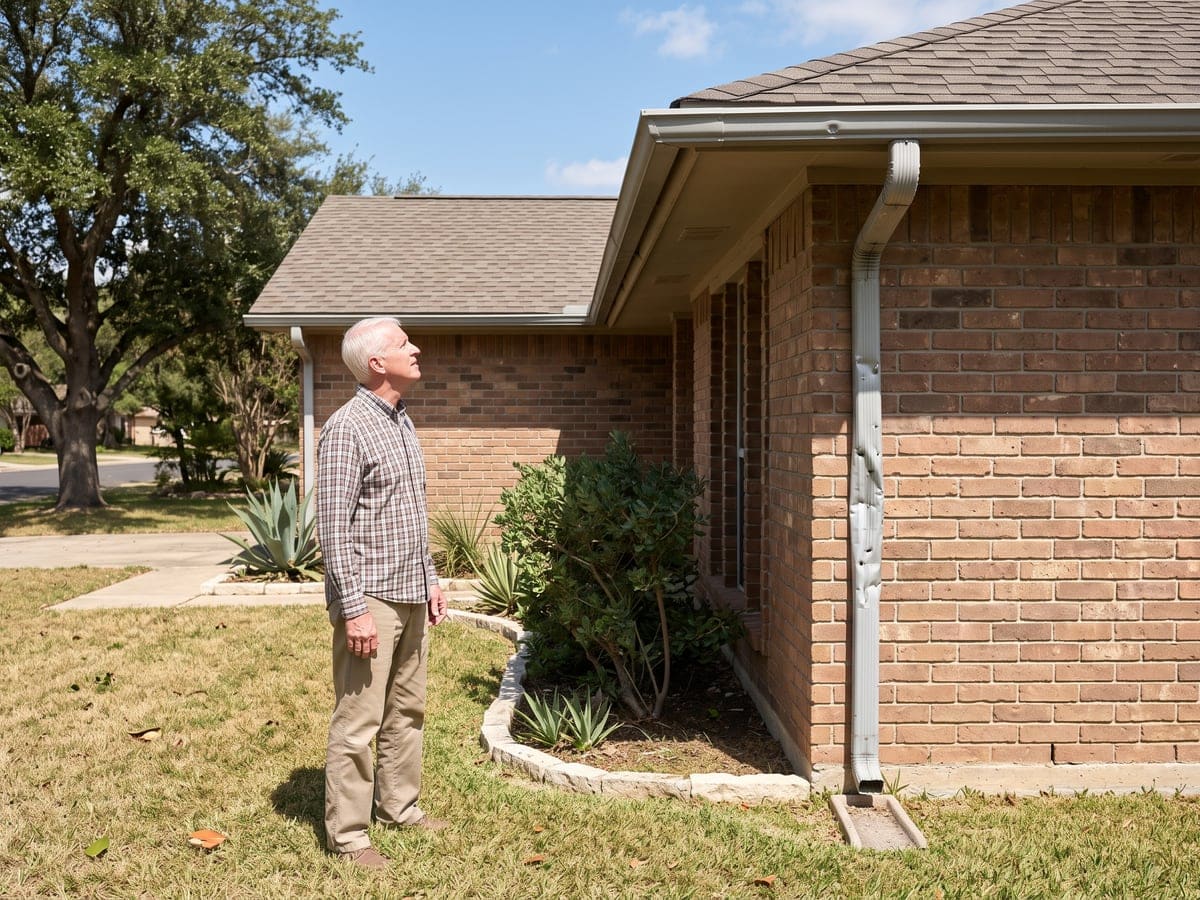
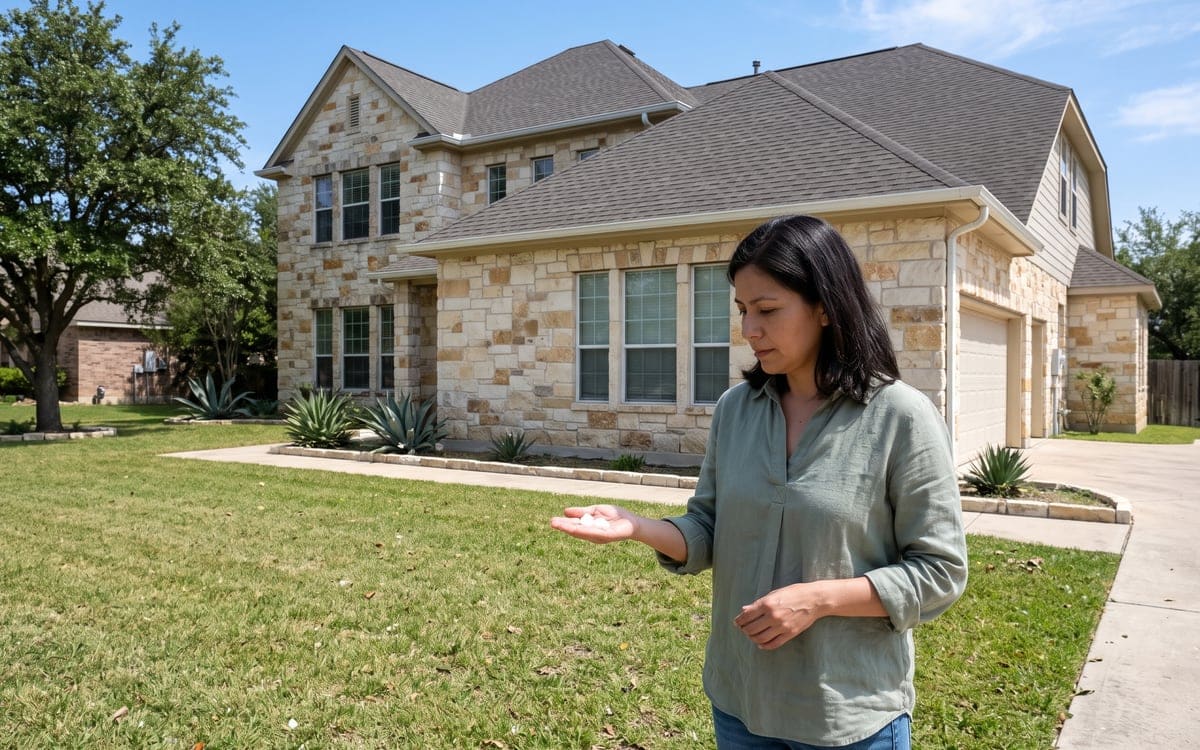
Hail can leave the marks IBHS names on asphalt shingles: dents and tears that can let water through, and lost granules that expose the asphalt to UV. Call about a hailstorm when marks are visible from the yard or granules show up in a downspout splash block.
A tan ring on a ceiling
A yellow or tan ring on a ceiling, a wet drywall seam or a stain beside a vent pipe can come from the roof. A roof leak call is where to start when a stain shows and no plumbing fix explains it.
Water coming in now
A visible drip from a ceiling, water pooling at a light fixture or running down a wall is a reason to move things out of the way, set a bucket under the drip and call about water coming in. Keep clear of a ceiling that sags or holds water, and of wet light fixtures.
Shingles lifted or missing after wind
NRCA says most wind damage begins at the edges of a roof system: once material loosens, suction can raise it and pressure can push it, rain can get in once the underside is exposed, and the exposed underside gives the wind more to grab. A wind repair is the call for a shingle, a strip or a ridge piece that has moved.
A standing seam or other metal roof
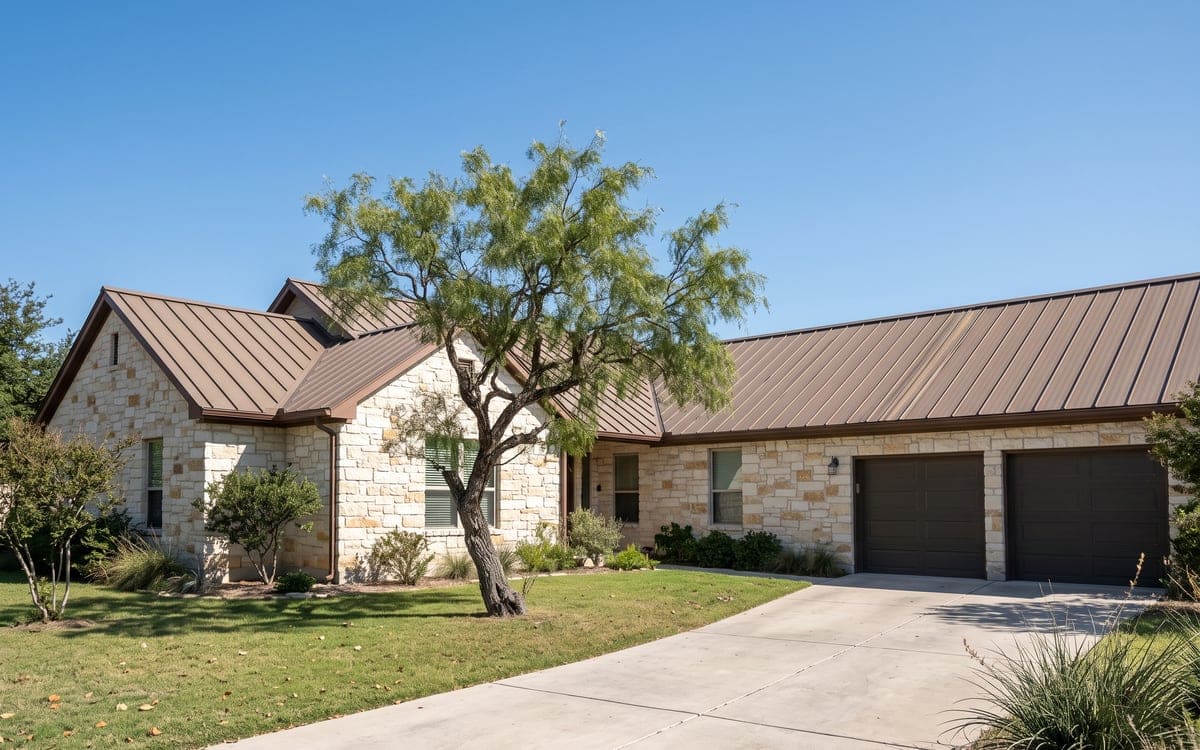
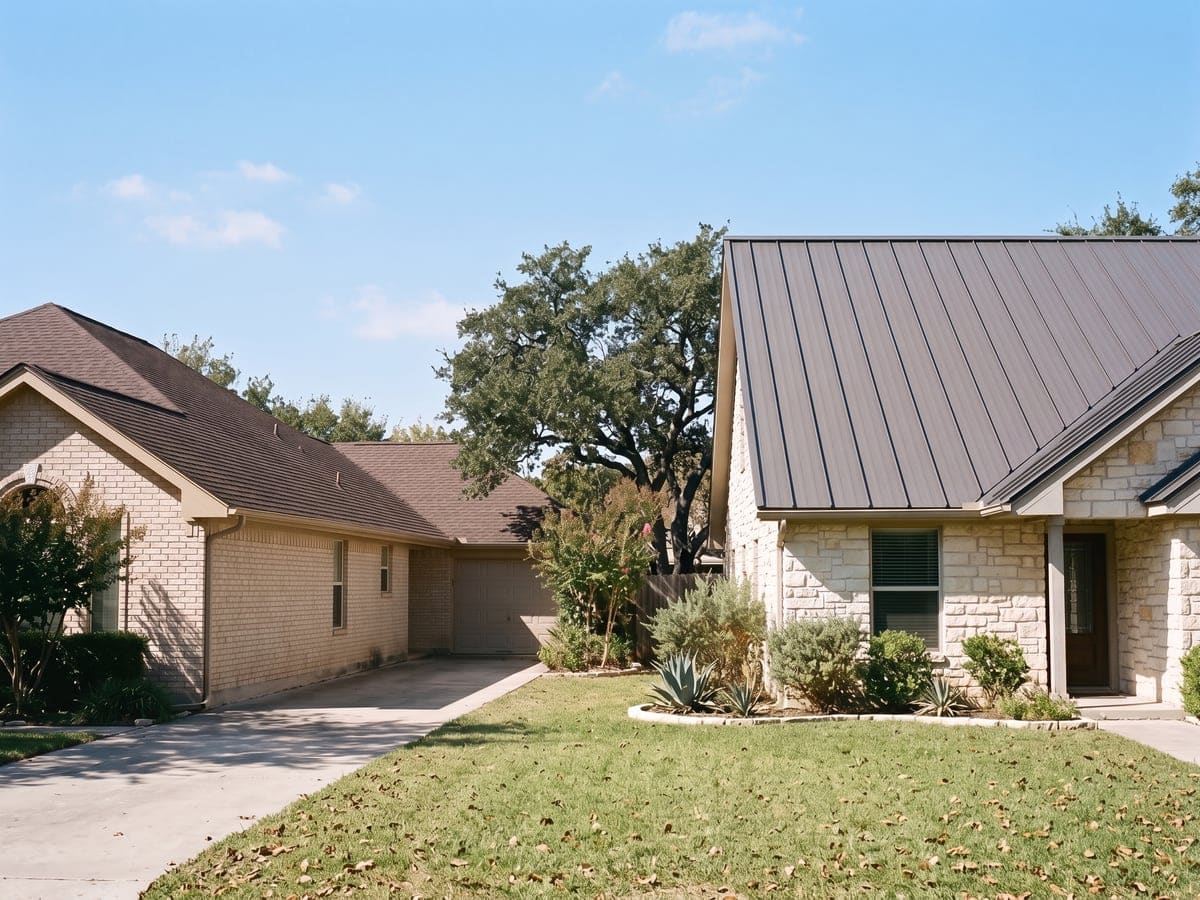
The MCA manual says any exposed fastener that is not completely secured, is crooked or has a defective seal will eventually leak, and that panels can leak only at seams, punctures or cut openings. A metal roof call is for a roof you already have or one you are weighing.
Clay or concrete tile
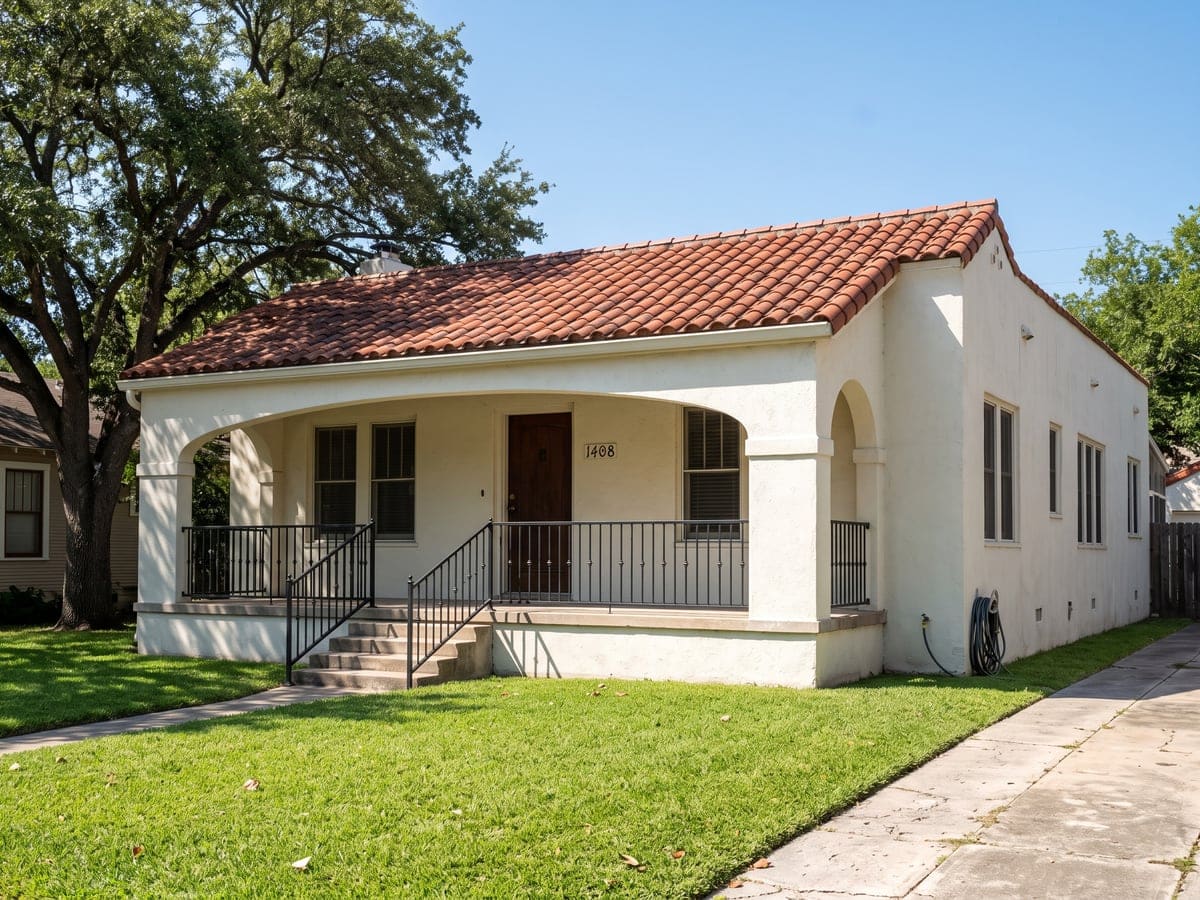
Eagle, a tile maker, says walking on a tile roof can break tiles and put the walker at risk. Clay or concrete tile work stays with a roofer who knows where to step on tile.
The City's permit line for a new roof
The City's Development Services department says re-roofing a home needs a permit any time a roof is replaced or installed, with an engineer's inspection report for a change in pitch or materials. Roofing is not on the City's No Permit Required list. The re-roof application states that a maximum of two layers of roofing materials is allowed under the residential code, and the same form asks whether the slope is changing or the material is changing to tile, and either answer needs an engineer's assessment report to clear the framing inspection. What the City requires at a particular address is a question for Development Services; see what moves the price for the parts of a new roof that drive the bill.
Historic districts and HOAs
San Antonio has 32 locally designated historic districts, from Leon Springs to the Mission Historic District on the south side. The Office of Historic Preservation says all exterior modifications and repairs to a property with a historic zoning overlay need a Certificate of Appropriateness, including side and rear yards and areas not readily visible from the street. Whether a particular house carries that overlay is a question for the City's maps; the Office decides.
Texas law also sets a line on homeowners' associations. Property Code 202.011 bars a property owners' association from prohibiting or restricting a property owner otherwise authorized to install shingles from installing shingles designed to be wind and hail resistant, to give better heating and cooling efficiency, or to generate solar power. The protection applies as long as the shingles resemble the ones allowed in the subdivision, are more durable than and of equal or superior quality to them, and match the look of surrounding homes. The City of San Antonio says it has no authority to enforce covenants and deed restrictions, so check your HOA's own rules before changing a roof's material or color.
San Antonio houses and who calls about them
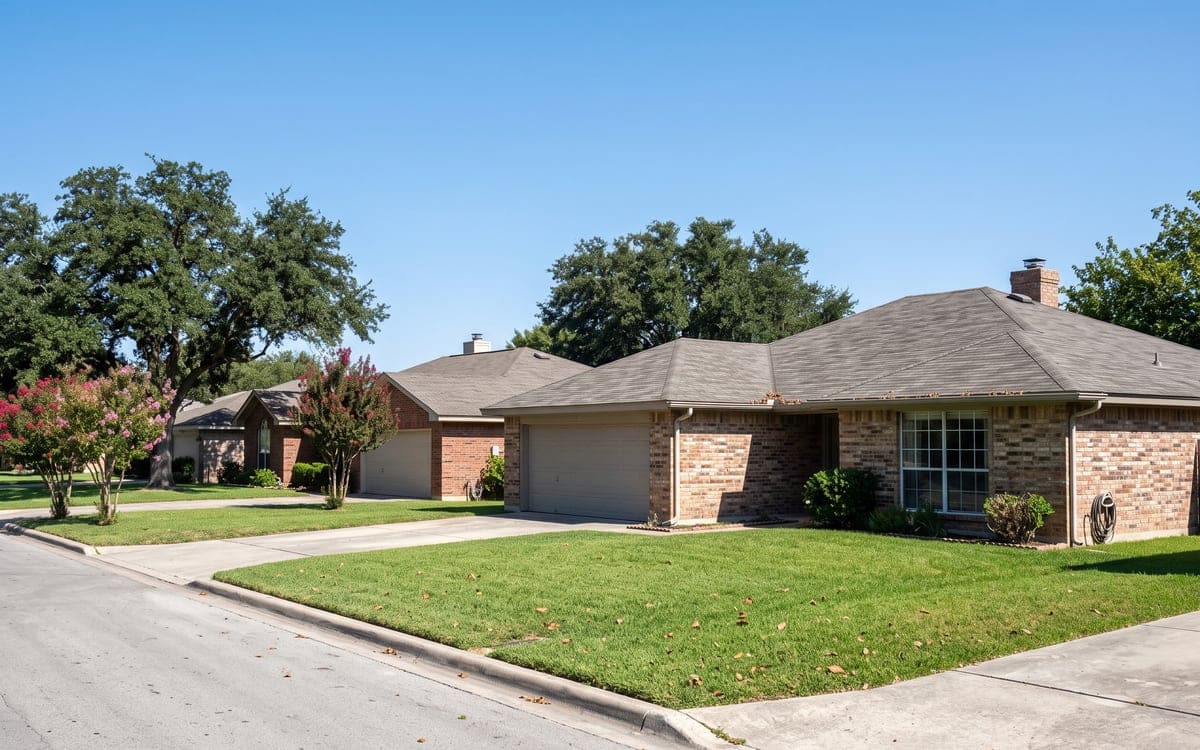
The median San Antonio home was built in 1985, with 60,358 built in the 1960s, 81,641 in the 1970s and 98,896 in the 1980s (the year is the house, not its current roof).
San Antonio has 289,380 owner-occupied homes and 265,201 renter-occupied homes. Of those, 270,792 owner-occupied homes are detached houses and 66,681 rented homes are detached houses as well. A roof call can come from an owner, a landlord or a property manager.
What happens after you call
- You tell us what the roof is doing and where, the material and age if you know them, what the weather did and whether it is a house, a rental or a small building.
- We look at the roof.
- You get the price for the work and decide. Nothing starts until you agree.
- The work gets done.
Questions about a roofing company in San Antonio
What roofing jobs do you take on?
Shingle, metal and tile repairs, leaks traced from the stain back to the entry point, emergencies when water is coming in, hail and wind damage, roof inspections, roof replacement and new roofs. Houses and small residential buildings. Not commercial roofs, gutters, solar panels or any wiring, chimney masonry, siding, insulation or remodeling; those belong to other trades.
What moves the price of a roof in San Antonio?
The Metal Roofing Alliance says the shape and pitch of the roof influence the installed cost of a metal roof more than the style of metal chosen, and that the staging area, material storage, hips and valleys also matter. On any reroof, existing deck attachment cannot readily be determined before the old roof system is removed (NRCA). See what moves the price for the full read.
Should I repair the roof or replace it?
Each roof is evaluated individually when choosing between replacing and recovering, and a reroof includes a check that the existing attic ventilation is adequate, per ARMA. The decision belongs on the roof itself, with a roofer there to see it.
What does hail do to a roof?
On asphalt shingles, dents and tears can let water through, and lost granules expose the asphalt to ultraviolet light, which breaks it down and makes it more brittle over time (IBHS). See what hail does to a roof for the full read on each surface.
Does a re-roof in San Antonio need a permit?
The City's Development Services department says re-roofing a home needs a permit any time a roof is replaced or installed, and an engineer's inspection report is needed for a change in pitch or materials. For what a particular roof needs, ask Development Services.
What should I have ready when I call?
Where the damage or stain is, the material and rough age of the roof if you know them, what the weather did or how long the issue has been showing, whether it is a house, a rental or a small building, and anything that limits access, such as a locked gate or a dog in the yard.
Where do you work?
We work on roofs across San Antonio.
Reaching a roofer
A description of the roof, where the trouble is and what the weather did is a good start. Call (210) 871-9021 and tell us.