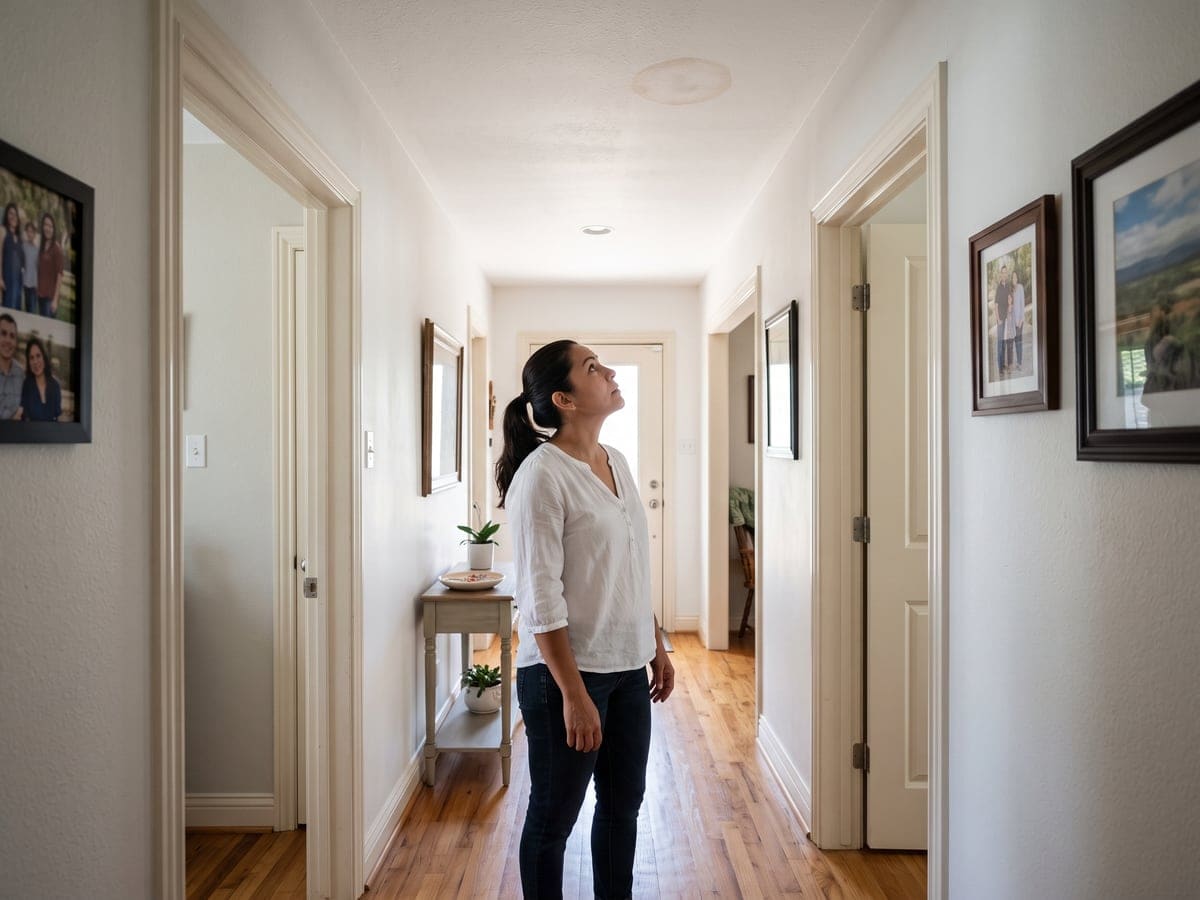
What a leak looks like inside the house
The things worth telling us about are what you see without going on the roof:
- A soft-edged tan or brown ring on an interior ceiling.
- A drip from the ceiling that only shows up in a heavy, long rain.
- Paint bubbling or peeling along the top of a wall, under a window or beside a fireplace.
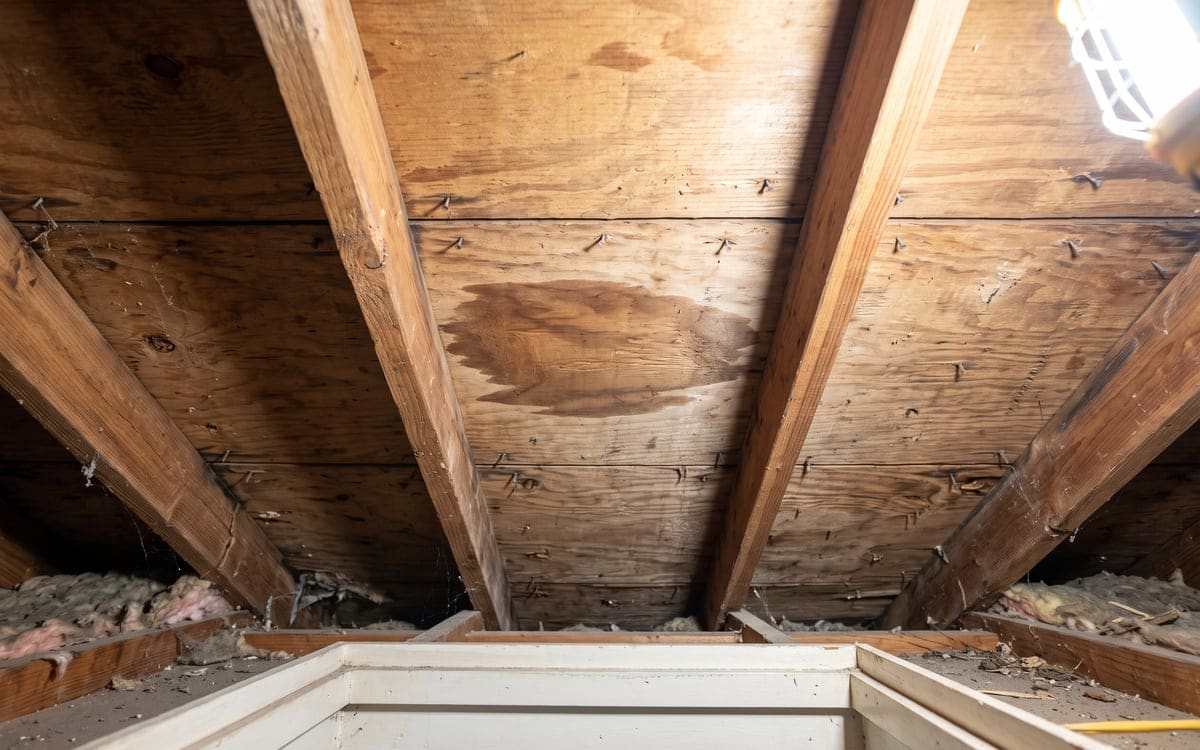
- A damp spot on the plywood seen from the attic hatch opening, without stepping in.
Move belongings and the rug under the drip, set a bucket on a towel, and keep clear of a ceiling that sags or holds water and of wet light fixtures. The look at the roof itself is for a roofer, since it is dangerous to walk, climb or work on a roof for anyone untrained. When you call, tell us where the stain is, which room sits above or below it, and what the weather did the day it showed up.
San Antonio rain and roof leaks
San Antonio International averages 32.38 inches of rain a year, with 81.3 days of 0.01 inch or more and 9.4 days of an inch or more. Rain comes in two humps: the airport's normal spring rain is 9.13 inches and its normal fall rain is 9.71 inches, against 5.70 inches in winter. The heaviest one-hour rain at the airport station is 3.88 inches, on May 25, 2013, and the wettest day on record brought 11.26 inches on October 17, 1998.
Average relative humidity at the climate station is 83 percent in the morning and 55 percent in the afternoon for the year. The City's property maintenance code says the roof and flashing shall be sound, tight and free of defects that admit rain, and roof drains, gutters and downspouts shall be maintained in good repair and free of obstructions. The City's guide notes that mold is frequently caused by a plumbing leak, leaking air conditioning ducts or a defective roof, and the fix is to find and repair the source of moisture.
The City also requires gutters and downspouts on homes whose roof edges are less than three feet from a property line.
How our roofer traces a leak
A leak call starts with what you saw inside and works outward. The shingle maker GAF states, with no study cited, that when a roof leaks, 95 percent of the time the leak is likely occurring at a roof flashing point.
Flashing at walls and chimneys
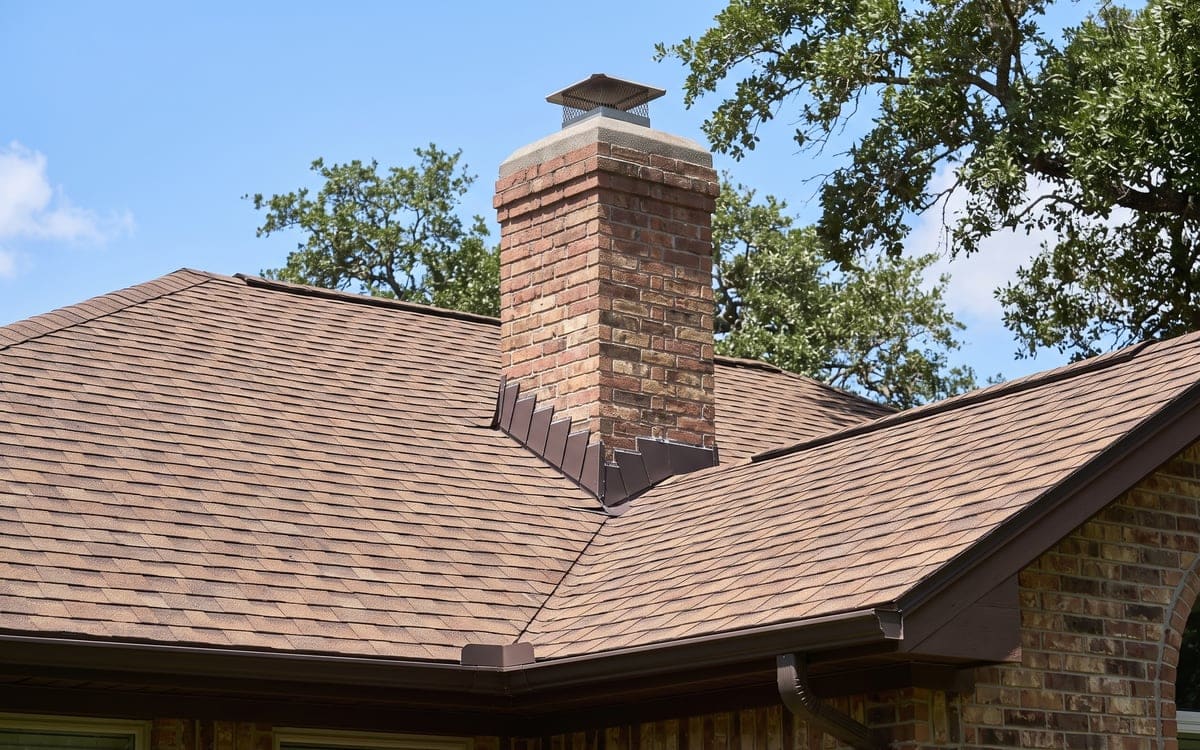
Flashing is the sheet metal at the joints where the roof meets a wall or a chimney. Roof-to-wall intersections are one of the most vulnerable areas, and if not flashed properly water can work into the wall and often go unnoticed until extensive damage results. A chimney gets apron flashing on the roof and counterflashing on the masonry, so the counter flashing slides over the apron flashing when the two move. Damaged or failing chimney flashing is a common cause of leaks for homeowners.
Valleys
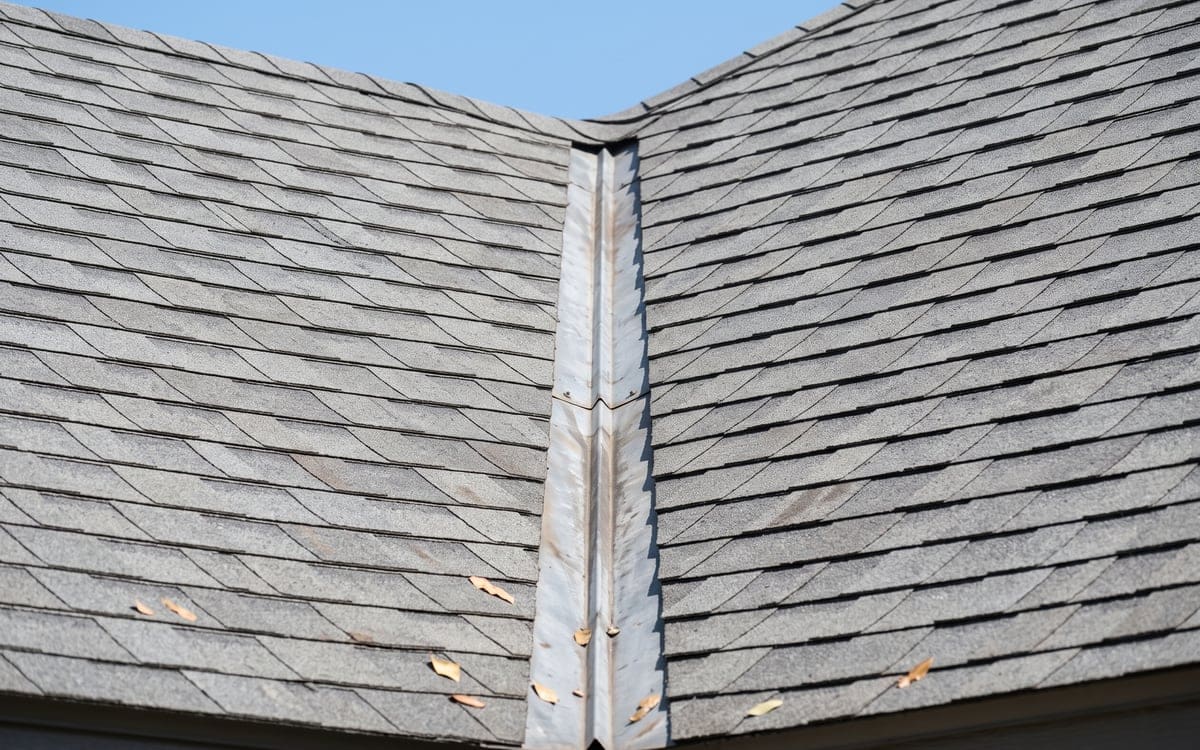
A valley carries water from two slopes into one line and is an extremely critical area of the roof, because the water sheds to the lowest point and an improperly flashed valley lets water creep under the shingles and into the home. The 2021 model code says valley linings go in before the shingles, and an open valley lined with metal needs a lining at least 24 inches wide of a corrosion-resistant metal. Where an open valley needs two or more strips of metal, the upper piece laps over the lower so that drainage is carried over the joint and not into it.
Pipe boots and vents
The flashing at a vent pipe is a preformed flange, called a boot, that fits snugly over the pipe, and the flange should be inspected once a year for cracks. Some vent pipes are sealed with a rubberized gasket; the gasket itself or its sealant can dry out and fall apart over time.
The covering
Our roofer looks at the shingles, metal panels or tile for anything that has moved. Damaged shingles cause leaks, and a shingle roof is intended to be water shedding, not a waterproof barrier. When gutters clog, water can back up underneath the shingles and overflow onto the siding or brick.
The attic and the deck
The underside of the roof deck can be inspected from the attic to detect leaks, and where a problem shows a competent roofer should make an on-roof inspection and any repairs needed, ARMA's manual says. The same manual's condensation note applies only in cooler climates, where water stains may be due to condensation from inadequate attic ventilation rather than a leak through the roof.
| What you notice | What our roofer checks | Work it can lead to |
|---|---|---|
| A soft-edged tan ring on a ceiling | The flashings, boots, chimneys and shingles across the roof | Re-flashing a joint, replacing a boot, or resetting shingles |
| A drip only in heavy rain | The flashings, boots and valleys the roof has | Replacing a boot or re-flashing a joint |
| Paint bubbling along the top of a wall | The flashings and shingles across the roof | Replacing worn step flashing and the shingles involved |
| A damp patch on the deck seen from the hatch | The deck and the covering, boots and flashings on the slopes | Opening the covering and replacing the deck piece |
A leak repair, a bigger repair or a new roof
A stain over one joint can be a one-piece repair. A roof with wear across every slope is closer to a new roof, decided at the roof. Water pouring in is an emergency. An inspection is a look at the whole roof, and the page for a tile roof covers the parts that differ for clay and concrete. For a roof that was through a storm, after hail covers the marks on the covering.
What a leak visit looks at
A leak repair visit is a look inside the house and on the roof, with the places that join to walls, chimneys and pipes read close in. Call (210) 871-9021 and tell us where the stain is, which room is above or below, how long it has been there, and what the weather did when it first showed up.