While water is coming in
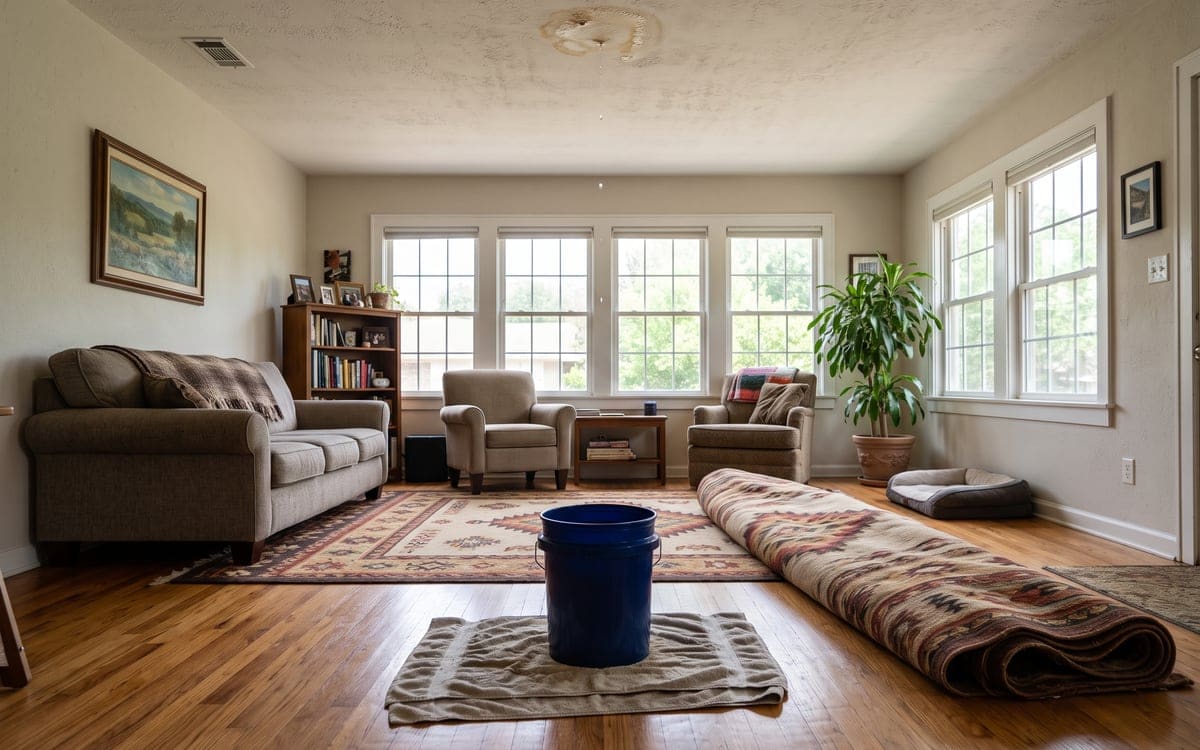
While the roof is open, work from inside the house:
- Move belongings and the rug under the drip.
- Set a bucket on a towel so the drip collects and the floor stays dry.
- Keep clear of a ceiling that sags or holds water, and of any wet light fixture.
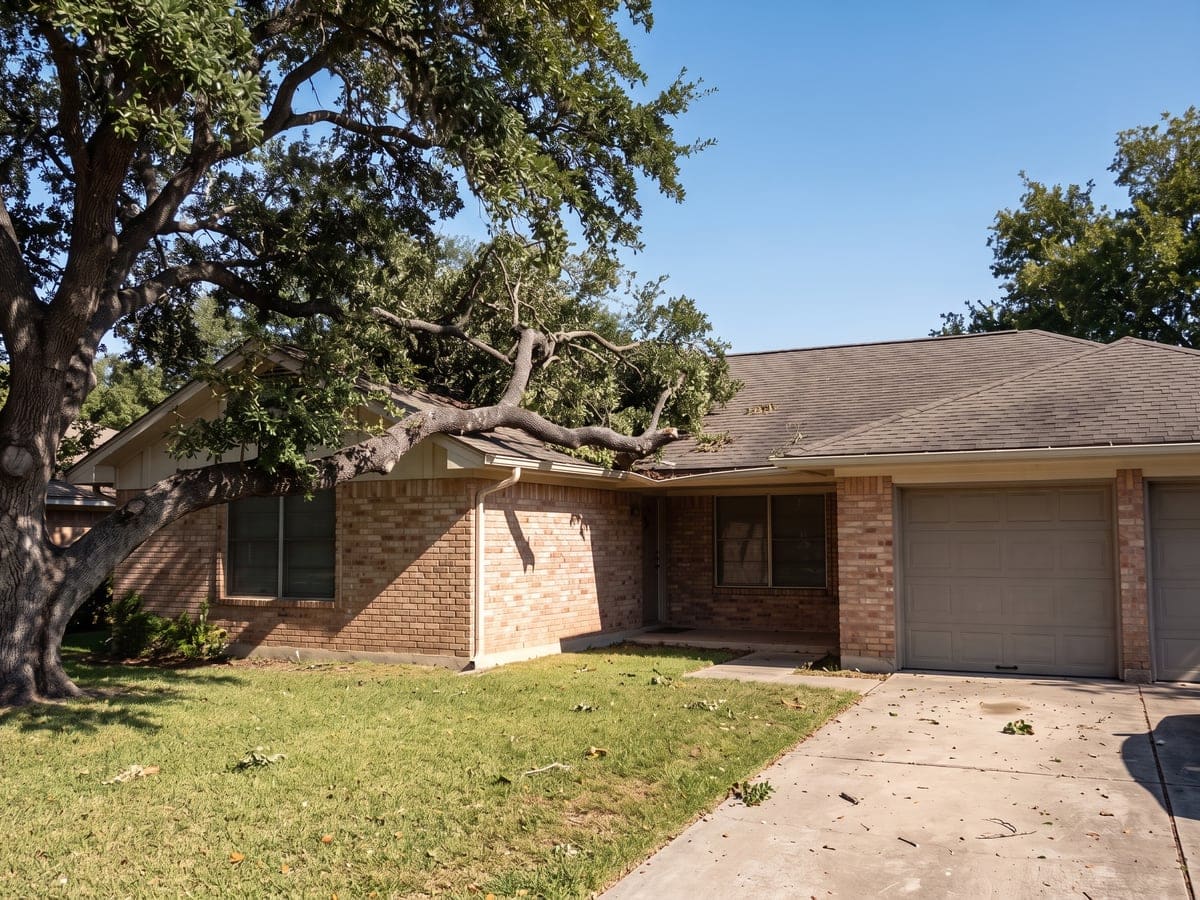
- Stay off the roof and the ladder. Stay well clear of any downed or hanging line in the yard. A limb on the roof belongs to a tree trade first.
Then call (210) 871-9021. Tell us where the water is coming through, which room is above, what the weather did and whether anything is on the roof. It is dangerous to walk, climb or work on a roof, and owners should assess roof damage from ground level and not attempt repairs on their own. Our contact page has how to reach us another way.
San Antonio's roof emergencies, by the record
The heaviest one-hour rain measured at the airport station is 3.88 inches on May 25, 2013, and the wettest day on record brought 11.26 inches on October 17, 1998.
Three San Antonio weather records
From the Weather Service's San Antonio records and NCEI's climate tables.
3.88 inches
Heaviest one-hour rain at the airport station, May 25, 2013
107 hours
Straight at or below freezing in the February 2021 winter storm
Wind events are the next kind. A microburst at San Antonio International on July 10, 1979 reached a peak gust of 77 mph. On July 15, 2007 the Storm Events Database lists an estimated 80 mph thunderstorm wind gust and an EF1 tornado at San Antonio, and on April 28 to May 1, 2021 storm surveys concluded that wind damage in northeast Bexar County into southwest Comal County was the result of straight-line winds estimated up to 80 mph. The strongest modern-era gust at the airport is 77 mph on May 23, 2022, and along the February 2017 tornado's path numerous homes had roof damage.
The February 10 to 18, 2021 winter storm is on record as an unprecedented eight-day period of winter weather across South-Central Texas, with failed power grids, burst water pipes and limited road and air travel. San Antonio stayed at or below freezing for 107 hours straight, second only to 109 hours in 1951; the airport's long-term normal is 14.0 freeze days a year. The January 24 to 25, 2026 storm brought mainly freezing rain to the San Antonio area, with about 8,000 customers in San Antonio without power at its height. Hail reports concentrate in spring: March, April and May hold 310 of 363 Bexar County reports of 1 inch or larger since 1996.
What happens when a roof is open
Most wind damage begins at the edges of a roof: once material loosens, suction can raise it and pressure can push it, rain can get in once the underside is exposed, and the exposed underside gives the wind more to grab. In a full-scale duplex test, the research group IBHS found a sealed roof deck can reduce water entry into a home by as much as 95 percent compared with a bare, unsealed roof deck (laboratory results).
The stopgap
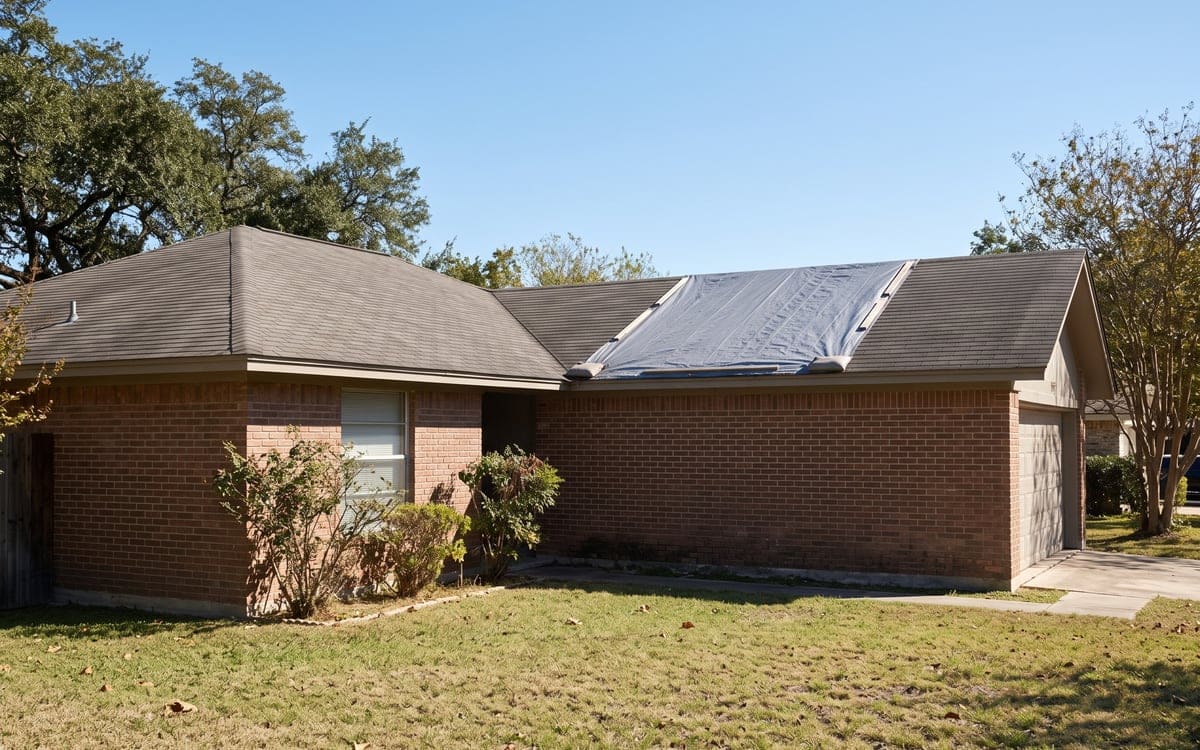
Roof openings should be temporarily covered with tarpaulins to minimize rain damage, and except in extreme situations roof system repairs should not be attempted; emergency repairs should be as simple as possible, with a professional roofing company returning for the permanent repair, NRCA says. ARMA says that when a roof is damaged, the first thing is to minimize the effects of water entry before repairs are attempted, with buckets or other means to collect and divert water from insulation and ceilings, and a tarp on the damaged outside area as an alternative. Setting the tarp is work for a roofer.
The damage under it
Penetrations and intersections are typically the places most vulnerable to water getting in, and signs of leakage there include wet or water-stained roof decking or attic flooring. Windblown debris such as glass and tree branches can severely damage a roof system as it is blown across it, and debris tends to clog drains and downspouts, NRCA says.
Water in the attic
The underside of the roof deck can be inspected from the attic to detect leaks, and where a problem shows a competent roofer should make an on-roof inspection and any repairs needed, ARMA says. Signs of leakage at penetrations and intersections include wet or water-stained roof decking or attic flooring, the same manual says.
The permanent repair
In the 2021 edition of the model existing building code, a roof repair is defined as the reconstruction or renewal of any part of an existing roof for the purpose of correcting damage or restoring the predamage condition, and the same model code says for damage less than substantial structural damage, the damaged elements are permitted to be restored to their predamage condition. What the City of San Antonio requires for your address is a Development Services answer.
| What you notice | What our roofer checks | Work it can lead to |
|---|---|---|
| Water coming through the ceiling | The slope above the drip | Re-flashing or shingle work |
| A limb on the roof | The covering and deck once the limb is clear | A deck patch and new shingles |
| Shingles gone after a wind event | The exposed deck and the surrounding seal strips | Re-sealing and replacing the lost shingles |
| A hole opened by debris | The hole's size and the deck condition around it | A patch of deck and matched covering |
An emergency repair, a storm repair or a new roof
Water coming in now is an emergency. Storm damage is the call once the water is stopped and the question is what the storm did across the whole roof. A slow leak is leak repair, a smaller job. The repair after is for the shingle, boot or flashing the look names. A new roof is for wear or damage on every slope. For a storm article, hail damage covers the marks a roofer looks for on the covering.
What an emergency visit looks at
An emergency visit is a look at the ceiling inside and the roof from the yard. Call (210) 871-9021 and say where the water is coming through, which room is above, what the weather did and whether anything is on the roof.