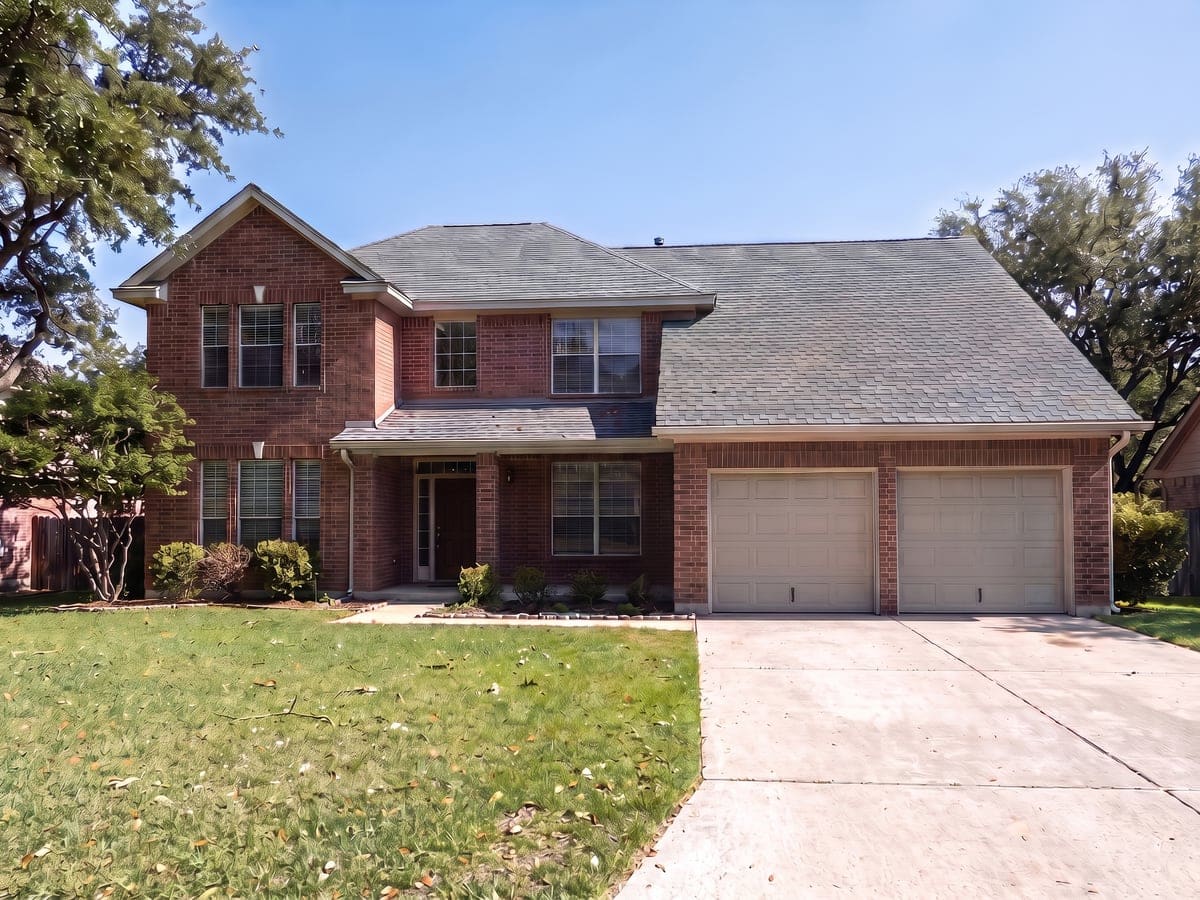
After the storm passes, from the ground
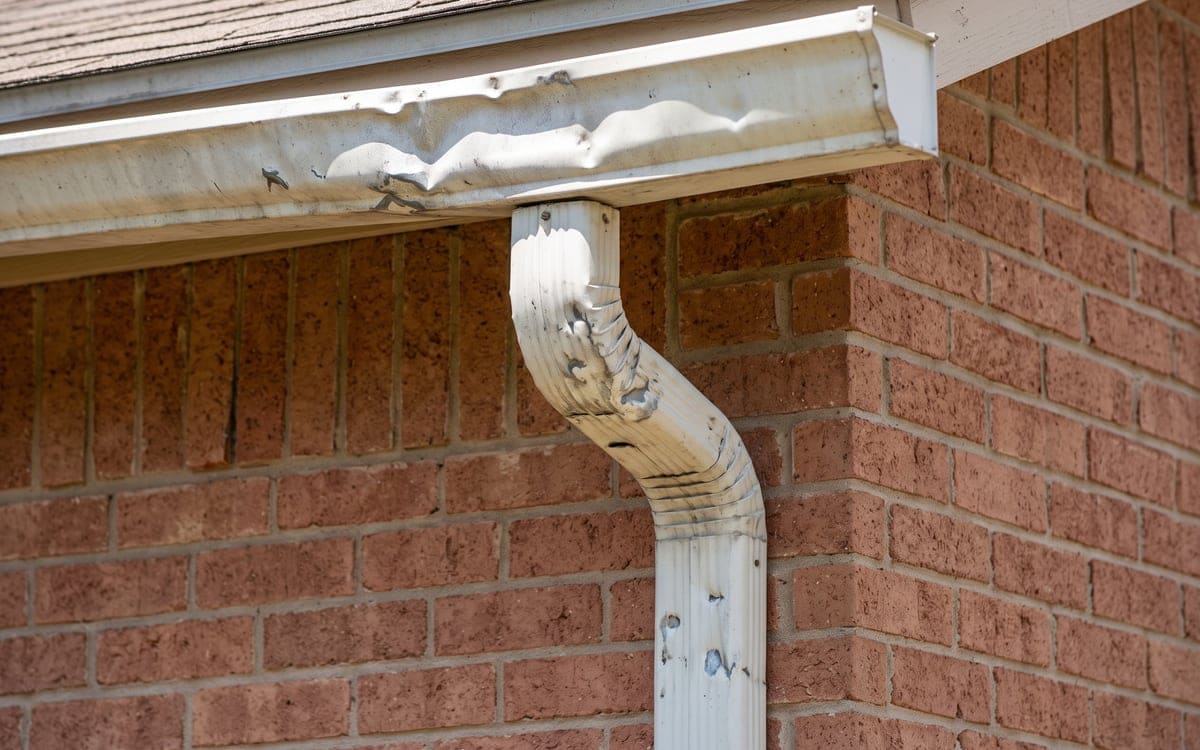
- Dents on gutters, downspouts and vent caps, seen from the yard.
- Shingle granules collected in the splash block at a downspout.
- Shingles lifted, creased or missing, seen from the sidewalk.
- New stains or damp spots on the ceilings.
- A downed or hanging power line near the house: stay clear and call the electric company.
The roof itself stays with a roofer right after a storm. NRCA, the roofing trade association, says homeowners and business owners should assess roof damage from ground level and not attempt repairs on their own, and that inspecting roof damage after a storm involves climbing a ladder onto a potentially unsound, storm-damaged structure. Hailstones on the surface and wet shingles make footing worse than it reads from the yard.
Hail and wind in San Antonio
The Bexar County rows of NOAA's Storm Events Database hold 363 hail reports of 1 inch or larger from 1996 to mid-2026, 126 of 1.75 inches or larger and 64 of 2 inches or larger, with 40 of 2.5 inches or larger and 20 of 3 inches or larger and 158 of them in April, 91 in May and 61 in March. Recent years hold 58 reports in 2016, 38 in 2021, 35 in 2023, and 26 in each of 2020, 2024 and 2025, with reporting growing over the span, and March 31, 2025 brought 14 Bexar County hail reports of 1 inch or larger, the largest 2 inches at Alamo Downs.
The Weather Service calls the April 12, 2016 storm the costliest hailstorm in San Antonio history; its event summary says a large swath of very large hail fell just north of downtown, with multiple reports of 2 to 3 inch hail and the largest stones 4.5 inches across. Thirteen days later, on April 25, 2016, a severe thunderstorm dropped large hail on San Antonio and Bexar County for the second time in less than two weeks, with baseball-size stones across the Shavano Park area. The same database lists 5.50-inch hail at Sayers, in eastern Bexar County, on May 3, 2021, the largest hail report in the county since 1996.
San Antonio wind comes from thunderstorms, not hurricanes. The Bexar County rows hold no hurricane, tropical storm or high wind (non-thunderstorm) reports from 1996 to mid-2026, and the database holds 64 Bexar County thunderstorm wind reports of 58 mph or faster, 18 of 70 mph or faster and 2 of 80 mph or faster. During the May 27, 1997 tornado outbreak, the Weather Service recorded a 122 mph straight-line wind gust at Kelly Air Force Base, while NOAA's row for the same event lists a 106 mph thunderstorm wind at Kelly AFB that day, the fastest wind report in the Bexar County extract since 1996.
On February 19, 2017, an EF-2 tornado with peak winds near 120 mph tracked 4.6 miles from the San Pedro Golf Course area through Ridgeview and Alamo Heights, and a few homes along Linda and Sharon Drives had their roofs completely removed, with many homes along the path taking roof damage. On October 9, 2011, an EF1 tornado touched down on the southwest side, and several homes in the Ridgestone subdivision had roof damage. San Antonio's amended residential code climate table lists a design wind speed of 108 mph.
What our roofer checks after hail or wind
Asphalt shingles
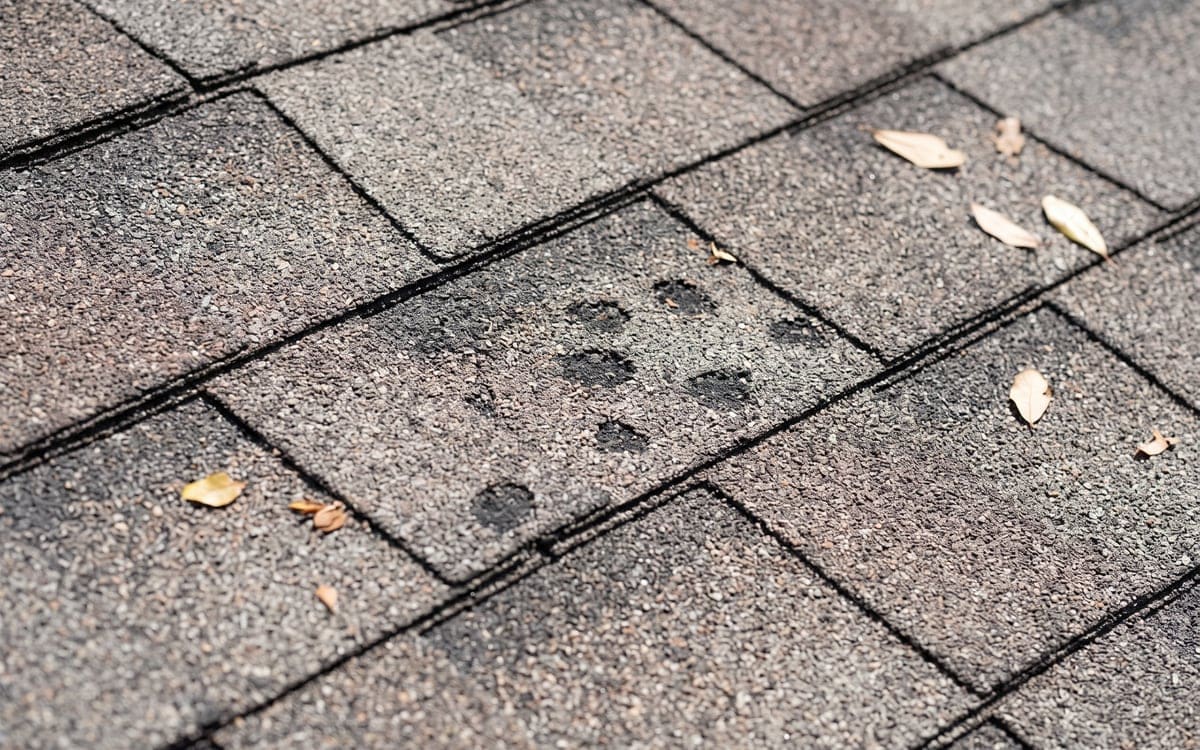
Asphalt shingles are about 80 percent of installed residential roofs in the U.S., and they are frequently damaged in hail and high-wind events, the research group IBHS says. On the shingle itself, IBHS writes that dents and tears can let water through a shingle, and lost granules expose the asphalt to ultraviolet light, which breaks it down and makes it more brittle over time. On wind, most wind damage begins at the edges of a roof system: once material loosens, suction can raise it and pressure can push it, and the exposed underside gives the wind more to grab, NRCA writes.
Metal panels and trim
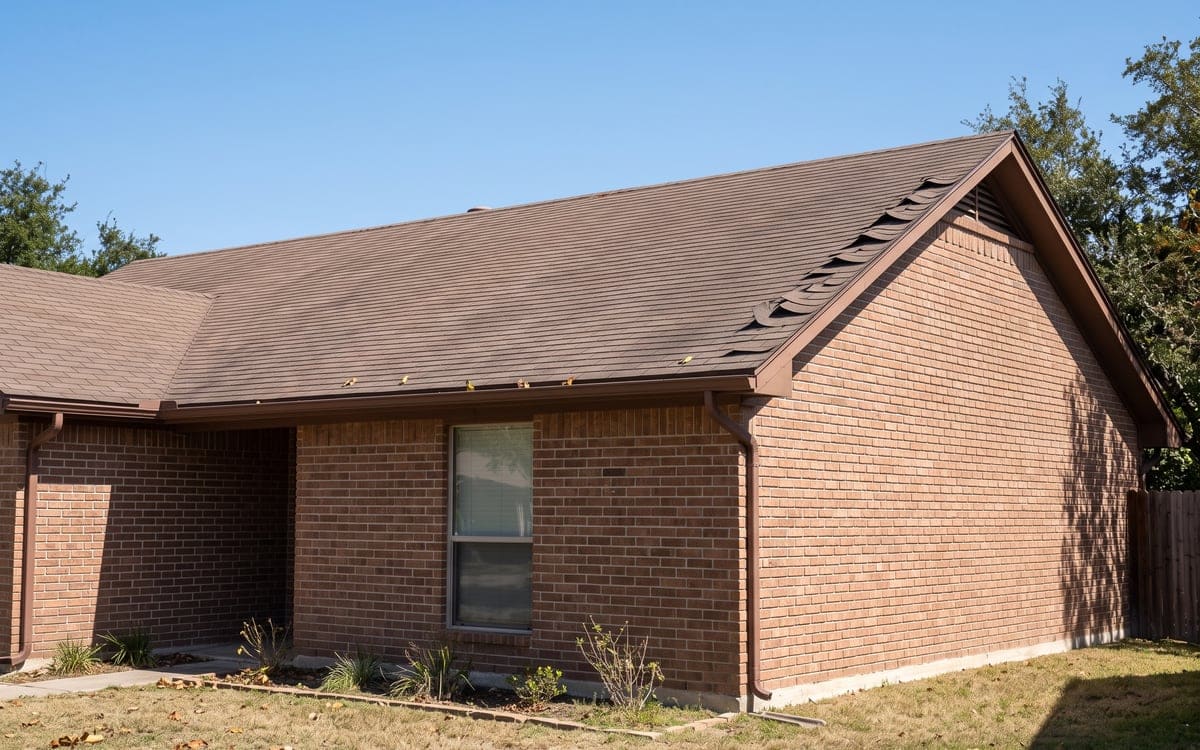
Many metal roofing products carry the highest impact resistance and hail rating given by UL, and hail will typically not penetrate a metal roof, the Metal Roofing Alliance says, and many metal roofing systems can withstand winds in excess of 140 mph, and the key to a high-performing metal roof is proper installation and secure attachment. On panel leaks, any exposed fastener that is not completely secured, is crooked or has a defective seal will eventually leak, and panels can leak only at seams, punctures or cut openings in the MCA's installation manual.
Tile
Many tile products have been tested to resist a 2 inch hailstone under the FM 4473 standard, and independent testing it sponsored shows properly installed tile can be designed to withstand winds up to 200 mph, the TRI Alliance says, and the idea that lifting a tile nose more than 2 inches proves the whole roof is non-compliant is not what the code test protocols say, and that lifting one or more tiles 2 inches does not determine code compliance. The reading stays with a roofer who works on tile.
Edges, ridge and vents
Wind does not act evenly on a roof: depending on the wind direction and the shape and location of the roof, some areas see suction and others see pressure, NRCA says, and most wind damage begins at the edges of a roof system.
Gutters and downspouts as signs
Dents on the gutter and vent caps and granules in the splash block are a sign that a closer look is called for.
| What you notice | What our roofer checks | Work it can lead to |
|---|---|---|
| Dents on gutters or vent caps | The slopes for dents, tears and granule loss | Shingle repair up to a replacement |
| Granules in the splash block | The slopes above for granule loss and exposed asphalt | A spot repair or a replacement |
| Shingles creased or lifted along a rake | The edges, where NRCA says wind damage begins | Shingle or starter-strip repair, up to a replacement |
| A ceiling stain after the storm | ARMA says penetrations and intersections are typically the most vulnerable | A leak repair at the flashing, boot or valley the water came in through |
| Tiles out of line on a tile roof | Each tile around the problem spot | Tile repair by a roofer who works on tile |
| Dents on metal panels, loose fasteners | Panels, fasteners, washers and the ridge trim | Panel repair, fastener replacement, up to a replacement |
Storm repair, a new roof, or an emergency
Emergency roof repair is for water coming in now. A repair in one area is the right call when damage is in one spot. The pages for a new roof, an inspection, metal panels and tile cover the rest.