Bexar County hail counts since 1996
The 1996 to mid-2026 extract holds 363 Bexar County reports at 1 inch or larger, 126 at 1.75 inches or larger and 64 at 2 inches or larger, with 40 at 2.5 inches or larger and 20 at 3 inches or larger. These are report rows: one storm often puts many into the file.
Of those reports, 158 fell in April, 91 in May and 61 in March. A stone size on a report row is a size, not a verdict on your roof.
April 12, 2016, and the hail that came back two weeks later
The Weather Service calls the April 12, 2016 storm the costliest hailstorm in San Antonio history, a strong supercell that dropped widespread 2 to 4.5 inch hail across the central and northern city. The event summary describes the evening's strongest storm as a large swath of very large hail just north of downtown, with multiple reports of 2 to 3 inch stones and a peak at 4.5 inches. The largest stone, 4.5 inches, fell about 3 miles southeast of Helotes on Blake Oak Run Street at 9:20pm.
Big hail on the record around San Antonio
From the Weather Service and NOAA's Storm Events Database. Hondo lies west of San Antonio.
5.50 inches
Hail at Sayers on May 3, 2021, the largest Bexar County report since 1996
Source: NOAA Storm Events Database
Hail came back on April 25, 2016. For the second time in less than two weeks, a severe thunderstorm dropped large hail across San Antonio and Bexar County, with baseball-size stones in the Shavano Park area. After the core moved through, the storm still laid down a widespread swath of 1 to 1.5 inch hail.
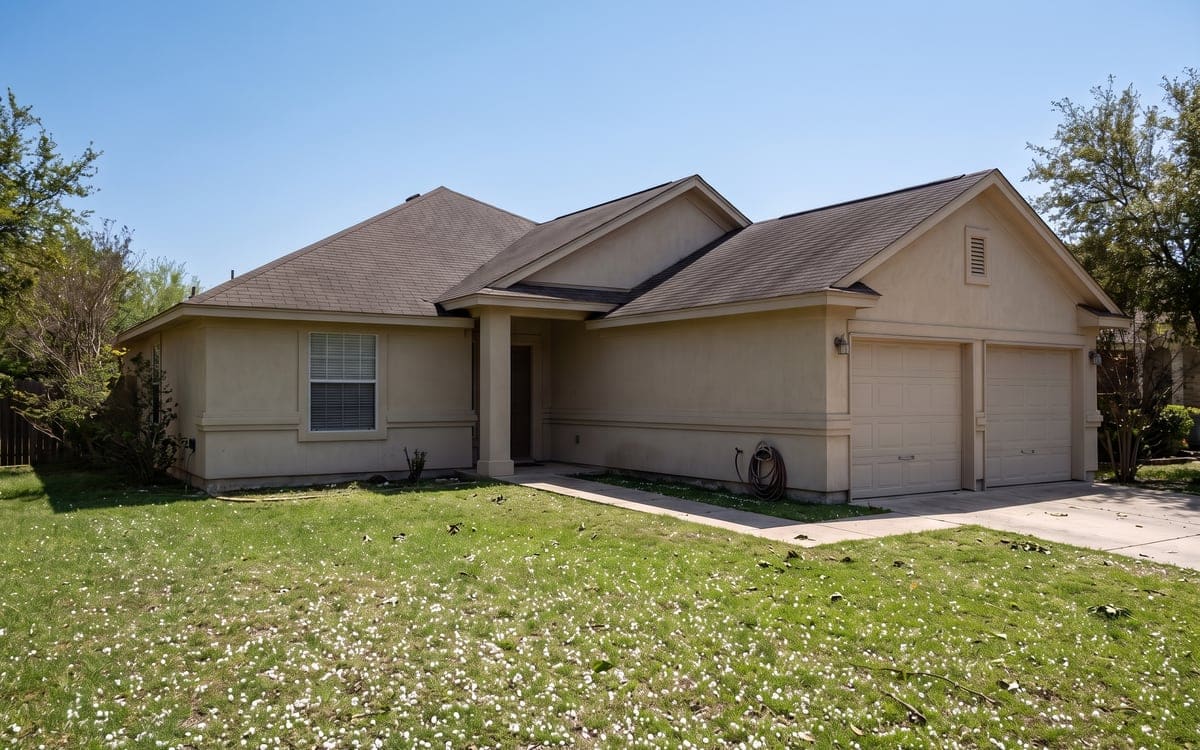
Big spring hail reaches San Antonio in other years too. Severe hailstorms struck on May 7, 1984 and again on May 24, 1985, and the Storm Events file holds a 4.00 inch hail report in San Antonio on May 6, 2001. On April 28, 2021 a 6.4-inch stone fell at Hondo, west of San Antonio, the largest hailstone on record in Texas, and on May 3, 2021 Sayers in eastern Bexar County logged 5.50-inch hail, the largest Bexar County report in the whole 1996 to 2026 extract, with 4.50-inch hail at Martinez and 3.00-inch hail at San Antonio the same day.
What hail does to an asphalt shingle
Asphalt shingles are about 80 percent of installed residential roofs in the U.S. and are frequently damaged in hail and high-wind events, the research group IBHS says. The shingle makers' association ARMA says the granules on a shingle give it color and protect the asphalt from the damage prolonged ultraviolet light would cause.
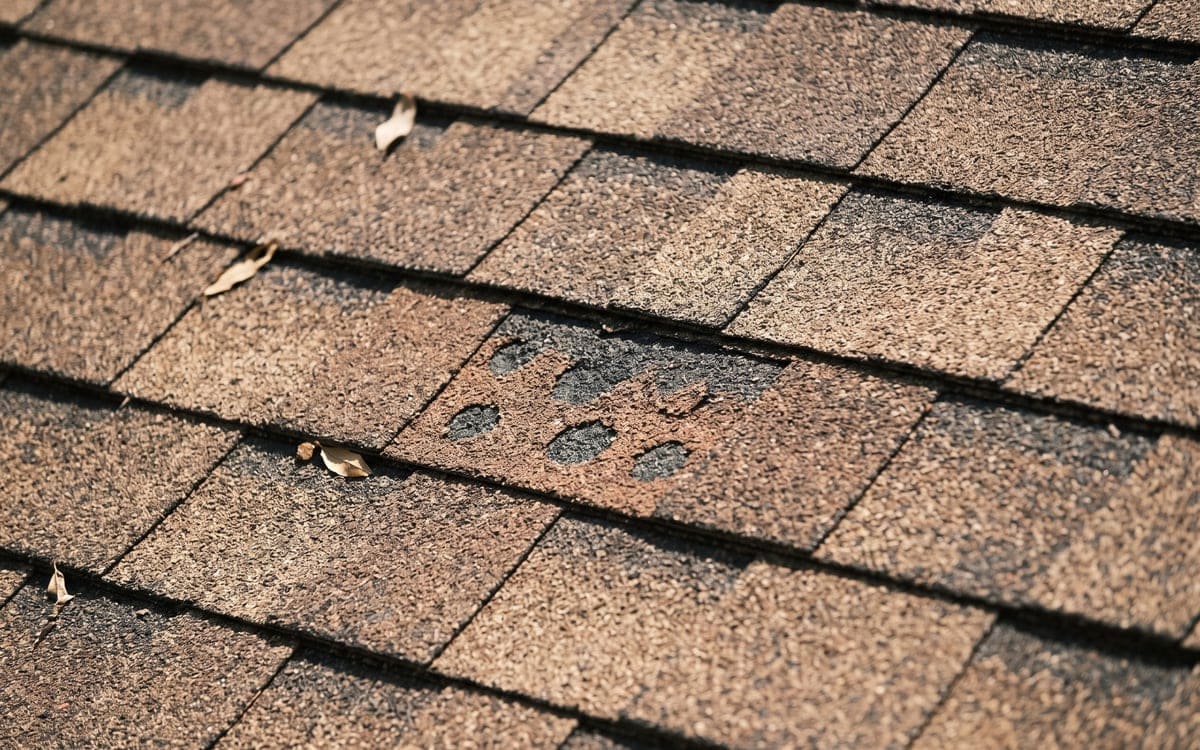
The modes of damage IBHS names are dents, tears and lost granules: dents and tears can let water through a shingle, and lost granules expose the asphalt to ultraviolet light, which breaks it down and makes it more brittle over time. The shingle maker Owens Corning puts the UV side the same way, writing that dislodged granules can prematurely age shingles, because without the granule coating shingles get more UV exposure and become more prone to warping and cracking. And damaged shingles cause leaks.
Metal and tile in hail
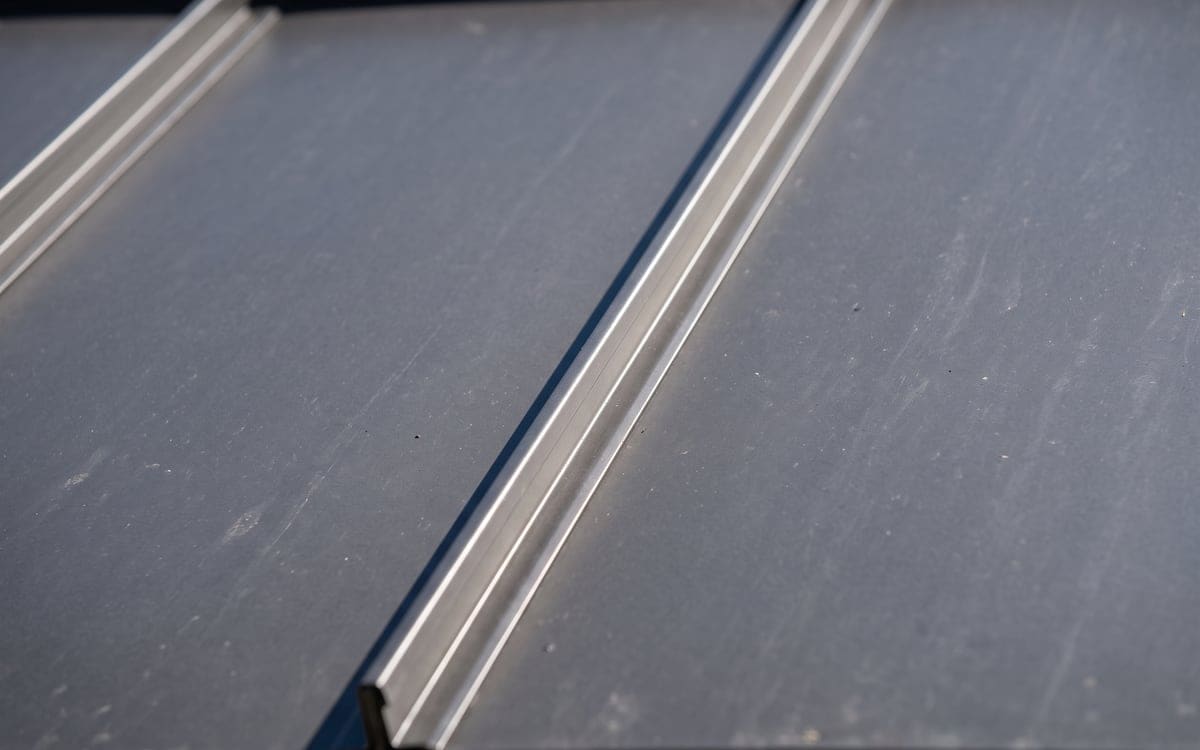
Metal and tile carry hail differently. The Metal Roofing Alliance, the industry's trade group, says many metal roofing products carry the highest impact resistance and hail rating granted by UL, and hail will typically not penetrate a metal roof.
On tile, the Tile Roofing Industry Alliance says many of its tile products have been tested to resist up to a 2 inch hailstone under the FM 4473 standard, and independent testing it sponsored shows properly installed tile can be designed to withstand up to 200 mph winds. Walking a tile roof is a roofer's work either way: the tile maker Eagle writes that walking on a tile roof can break tiles and put the walker at risk.
| Roof covering | What its trade group says about hail | What a roofer checks |
|---|---|---|
| Asphalt shingles | ARMA says granules protect the asphalt from UV; IBHS says dents and tears can let water through and lost granules expose the asphalt to UV. | Dents, tears and granule loss, and the flashing at walls and vents. |
| Metal panels | The MRA says many metal products carry UL's highest hail rating and hail typically does not penetrate. | The look of the panel the MRA describes. |
| Clay or concrete tile | The TRI Alliance says many tile products have been tested to resist a 2 inch hailstone under FM 4473. | The look from above by a roofer who can walk the tile safely. |
What you can see from the ground, and what to leave alone
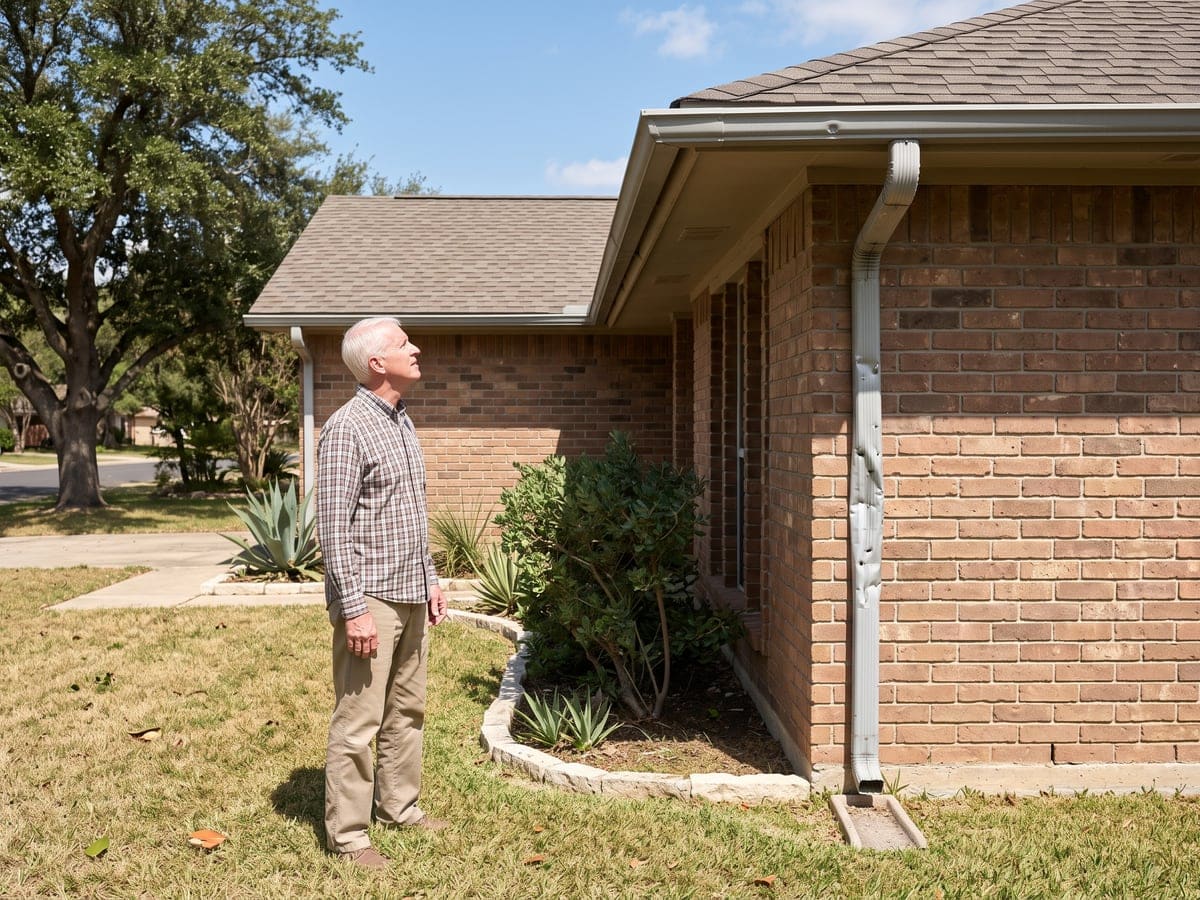
The ground is where a homeowner's look belongs. NRCA strongly encourages homeowners and business owners to assess roof damage from ground level and not attempt repairs on their own, with closer damage assessment and repairs done by a roofer. From the yard, with a phone's zoom in your hand:
- Dents on gutters, downspouts and the metal faces of vents.
- Shingle granules collected under a downspout at a splash block.
- Shingles that have slipped out of a course or disappeared.
- Water stains on an interior ceiling.
Do not go up on the roof after hail. Hailstones, loose granules and wet shingles make footing poor, and a storm can bring branches onto wires. Eagle says walking on a tile roof can break tiles and put the walker at risk, so on tile the look stays with a roofer. A tarp, if one is needed, is a stopgap a roofer sets.
What a roofer checks after hail
Our roofer looks at the dents, tears and granule loss IBHS names on asphalt shingles, at the panel the Metal Roofing Alliance describes on a metal roof, and at the tile from above where it is safe to walk; and reads the flashing at walls, chimneys and skylights the same way.
What the roof needs next depends on what the inspection finds. The site's storm damage roof repair page carries the whole storm, roof repair carries the specific marks it left, roof inspection carries the look at the roof, and emergency roof repair is where to call while water is still coming in. A metal roof has its own look under metal roofing, a tile roof under tile roofing. The roof replacement cost article walks what sets the price of a new roof, and impact resistant shingles are a covering choice we can talk through for the next one.