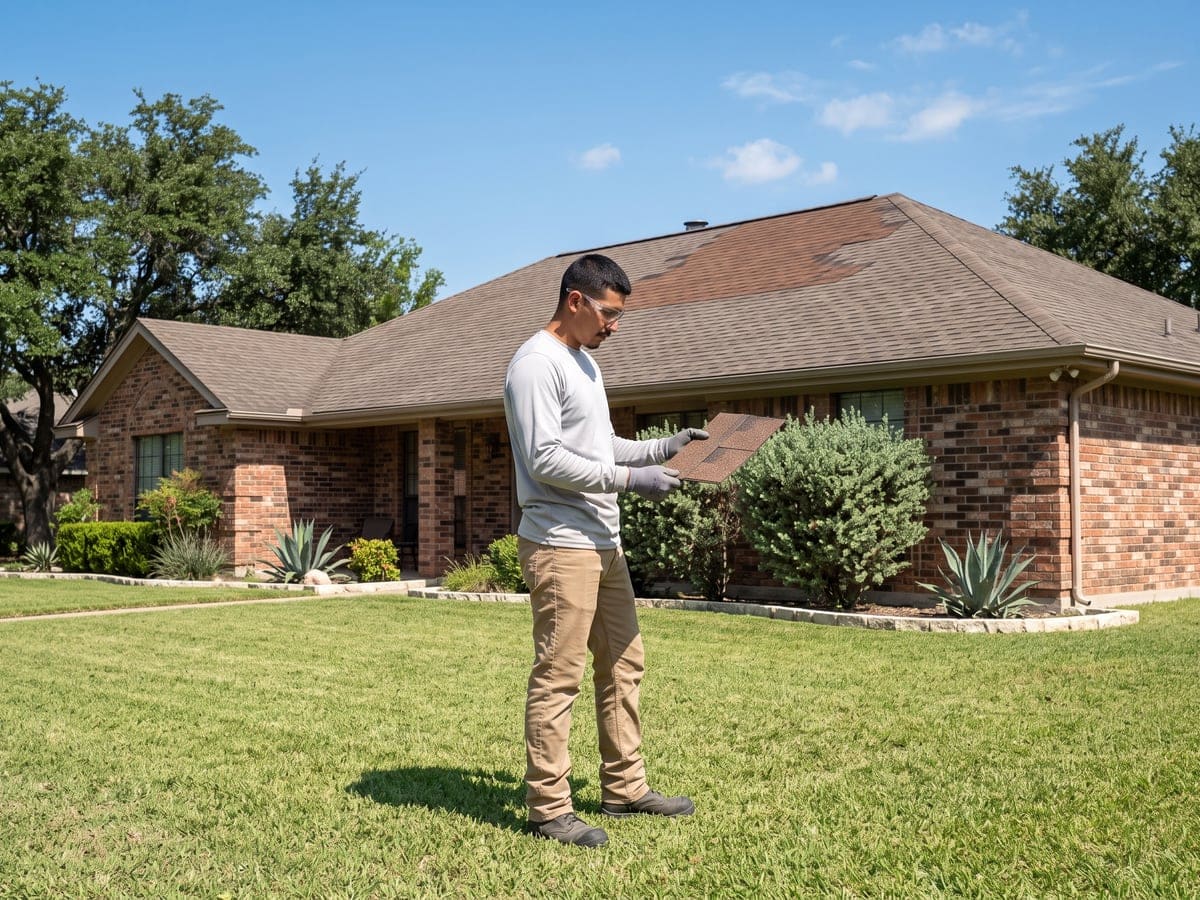
What a roof in need of repair looks like from below
A few things are worth telling us about if you see them from the yard or from inside the house:
- A shingle lifted, creased or torn after a storm, seen from the lawn.
- A dark strip of granules at a downspout's splash block or in a gutter visible from the ground.
- A tan or brown ring on an interior ceiling, or paint bubbling along the top of a wall.
- A damp patch on the plywood seen from the attic hatch opening, without stepping in.
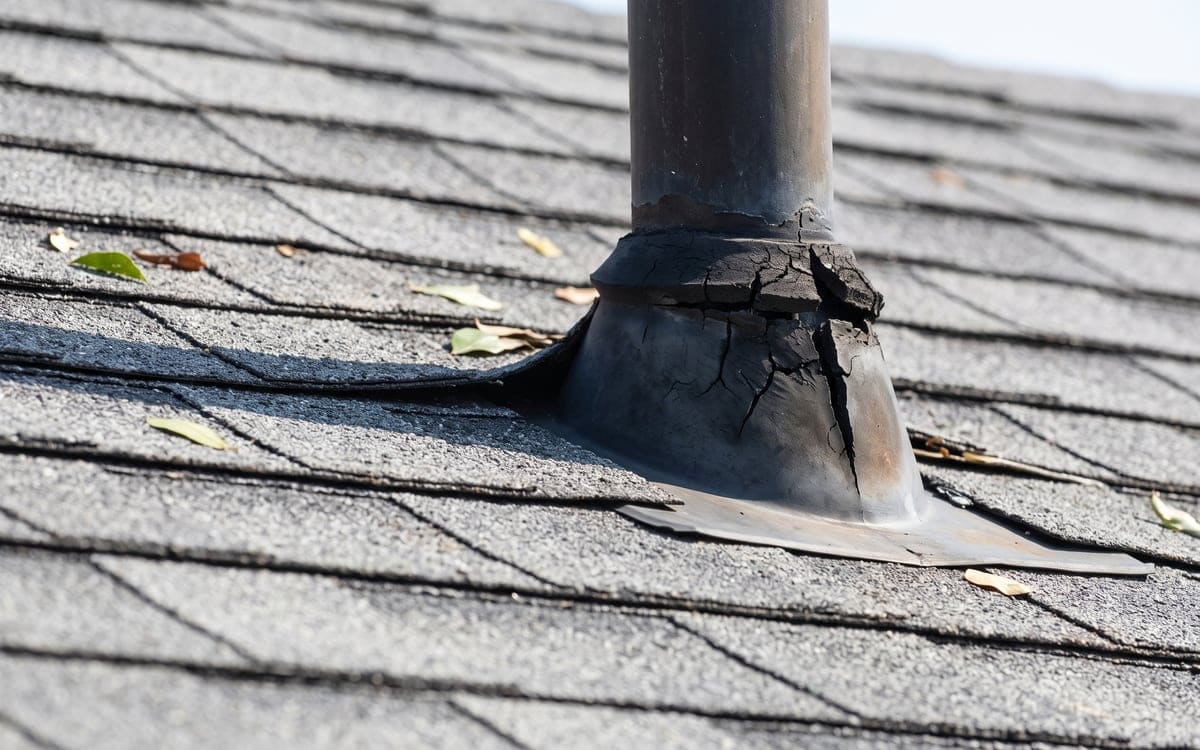
- A dented vent cap, or a cracked rubber collar on a plumbing vent pipe, spotted with binoculars or a phone's zoom.
When you call, tell us what you saw and where: the slope that faces the yard, how long the ring has been on the ceiling, what the weather did the week before. The look at the roof itself stays with a roofer. Falls are the leading cause of death among workers in residential construction, and it is dangerous to walk, climb or work on a roof for someone who is not trained for the work.
Roof repair in San Antonio's hail, wind and sun
The NOAA Storm Events Database holds 363 Bexar County hail reports of 1 inch or larger from 1996 to mid-2026, with 158 in April, 91 in May and 61 in March. Those are counts of report rows in the county, not of every yard.
The same database lists 64 Bexar County thunderstorm wind reports of 58 mph or faster since 1996, and 18 of 70 mph or faster. NRCA says most wind damage begins on the edges of roof systems: when roofing material loosens, the wind's suction can raise it and the wind's pressure can push it further.
San Antonio International averages 122.4 days a year with a high of 90 degrees or more, and the city gets about 57 percent of possible sunshine for the year. The City's property maintenance code says a roof and its flashing shall be sound, tight and free of defects that admit rain.
Where our roofer looks on a roof that needs work
Most components of an asphalt shingle roof can be repaired independently, without disrupting a large area, the shingle makers' association ARMA says, so the look at a repair call is a slope-by-slope read, part by part.
The shingles
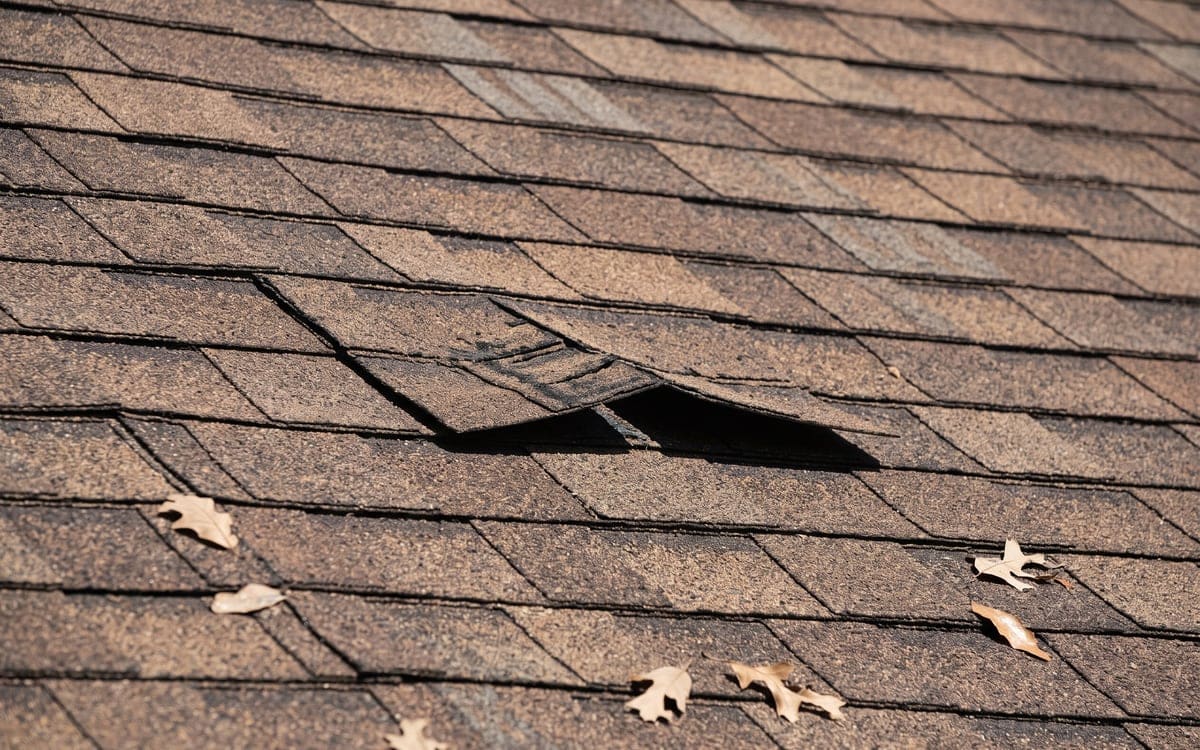
ARMA lists resealing wind-damaged shingles, replacing shingles damaged by debris, and repairing backed-out fasteners among the repairs a qualified roofer can make. In the heat, the sealant bond on existing roofs is likely fully activated, so shingles do not want to separate without tearing. The granules on a shingle give it color and protect the asphalt from the damage prolonged ultraviolet light would cause.
The flashing at walls, chimneys and valleys
Flashing is the sheet metal at the joints where the roof meets a wall or something comes through it. The 2021 edition of the model residential code calls for flashings at wall and roof intersections, wherever the roof changes slope or direction, and around roof openings. A chimney gets apron flashing on the roof and counterflashing on the masonry, so the counter flashing slides over the apron flashing if the two move. Valleys are especially vulnerable to leakage because they concentrate water from two slopes into one line, and the roofing trade association NRCA's 2022 repair manual covers replacing step flashings, repairing headwall flashings, and completely replacing valleys.
Pipe boots, vents and the ridge
The flashing at a plumbing vent is a preformed flange, called a boot, that fits snugly over the pipe, and the flange should be inspected once a year for cracks. Some vent pipes are sealed with a rubberized gasket, and the gasket itself or its sealant can dry out and fall apart over time.
The deck under a soft or stained area
Under the shingles sits plywood or OSB sheathing nailed to the rafters. ARMA says if the roof sheathing is already in place, check it for deteriorated or rotted areas, which should be replaced. A damp patch seen from the hatch opening is one place a repair opens up; NRCA's manual covers replacing a section of damaged underlayment and roof deck sheathing.
Matching what is already there
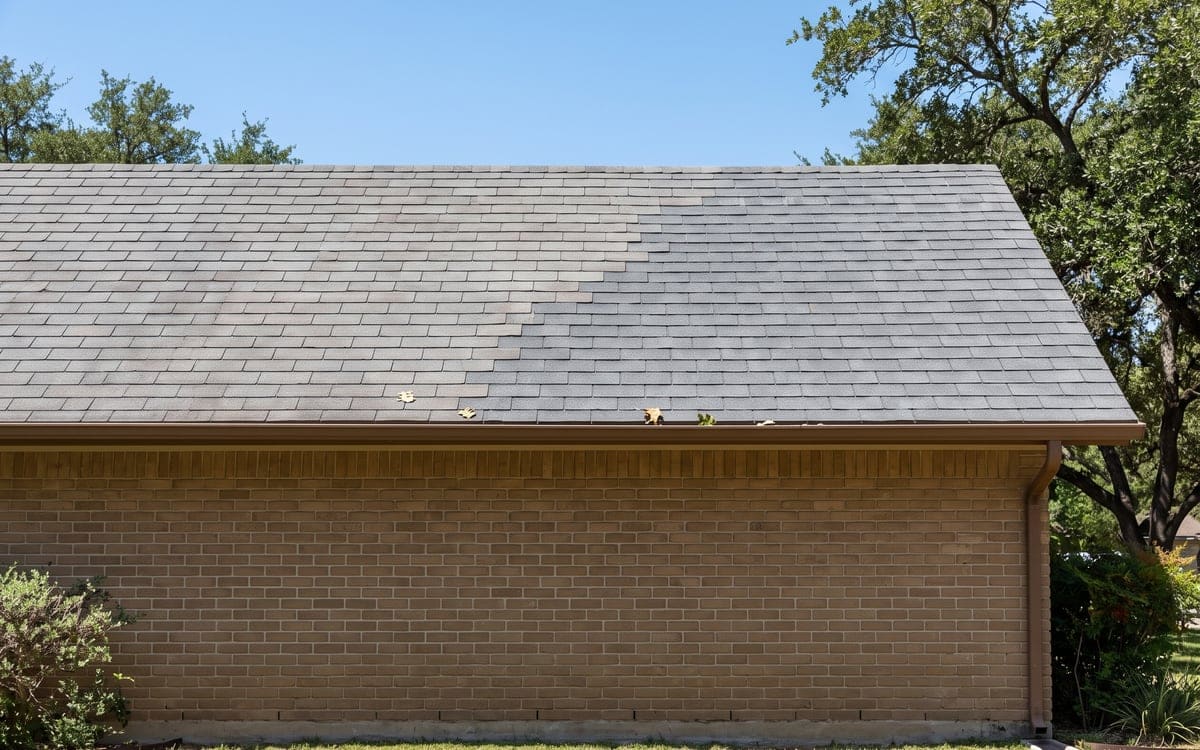
A good repair uses materials that best match the shingles in place, and the color name and the install year help find the match. A repair that needs new shingles may be aesthetically different initially because the new material has not aged the same, and that difference will generally become less apparent over time. For tile, the manufacturer should be consulted so replacement tiles will properly interlock and seat with the existing ones; failure to seat can lead to leaks and breakage.
| What you notice | What our roofer checks | Work it can lead to |
|---|---|---|
| A shingle lifted or creased after wind | Whether the seal strip let go and the nails still hold | Resealing or replacing that shingle |
| Granules at a downspout | The shingle surface on the slopes above | A closer look before anything is replaced |
| A ceiling stain anywhere in the house | The flashing, boots and shingles on the slopes above | Re-flashing a joint, replacing a boot, or resetting shingles |
| A damp patch at the hatch opening | The deck under the stain and the slope above it | Replacing that section of deck |
| A dented vent cap seen from the lawn | Whether the cap still seals around the pipe | Replacing the cap and resetting the shingles around it |
Repair, a bigger repair or a new roof
One lifted shingle, one cracked boot or one piece of flashing is work for a repair. Damage across a whole slope after hail across the roof is a storm call. A ceiling stain with a stain with no clear cause belongs to leak repair. Water coming in now is an emergency call. A full inspection is a look at the whole roof, and a new roof is for wear on every slope. The City's re-roof application says a maximum of two layers of roofing materials is allowed per the residential code. Metal roof repairs and broken tile have their own pages. For storms, what hail does covers the marks, and what moves the price walks through the drivers on a new roof.
What a repair visit looks at
Call (210) 871-9021 and tell us the material and age of the roof, which slope, what the weather did and where any stain is inside.