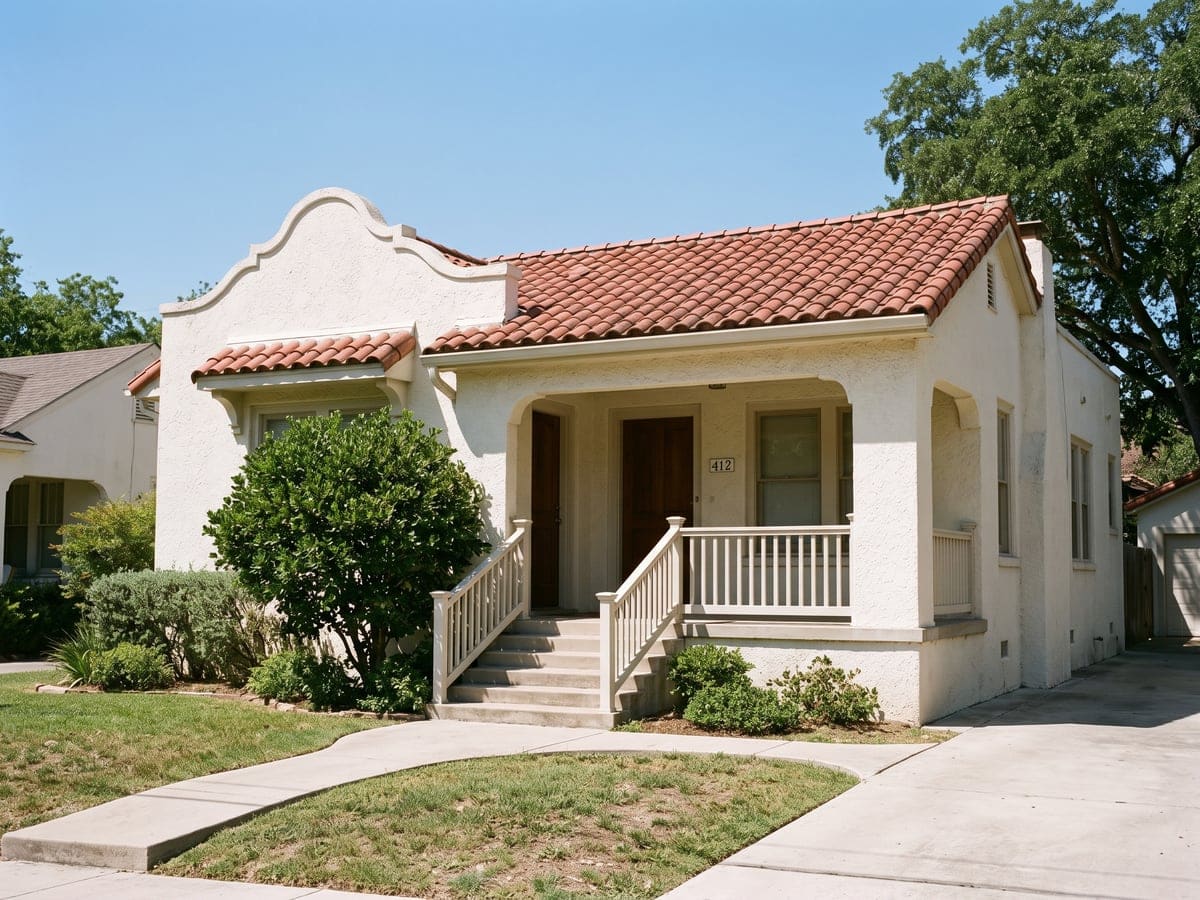
What you can see of a tile roof from the ground
- A tile cracked across its face.
- A tile slipped out of its course, leaving a gap in the pattern.
- Debris lodged above a valley or around a vent, holding water.
- A ceiling stain inside under a valley, a chimney or a pipe.
- Discoloration along an eave line or around a hip or ridge cap.
Please do not walk a tile roof: the concrete tile maker Eagle warns that walking on a tile roof can break tiles and put the walker at risk. If any of those catches your eye from the yard or inside the house, call (210) 871-9021 and tell us what you noticed, where it is on the roof, and whether the tile is clay or concrete if you know.
Tile roofs in San Antonio
The Office of Historic Preservation's guidelines name roof materials in San Antonio's historic districts as slate, clay tile, cement tile and metal, with barrel-rolled clay tiles and standing seam metal as two examples, and for sloped roofs in those districts call for replacing roofing materials in kind whenever possible. The city has 32 locally designated historic districts; the Office decides each case.
The City also has a rule for a switch to tile. Its re-roof application asks whether the material will change to tile and says if yes, an engineer's assessment inspection report is needed to clear the framing inspection. More broadly, re-roofing a home needs a permit any time a roof is replaced or installed, and an engineer's inspection report is needed for a change in pitch or materials, per Development Services.
From 1996 to mid-2026 NOAA's Storm Events Database holds 363 Bexar County hail reports of 1 inch or larger and 64 of 2 inches or larger, plus 20 of 3 inches or larger. The TRI Alliance says many tile products have been tested to resist up to a 2-inch hailstone under FM 4473. San Antonio International averages 14.0 freeze days a year, and the City's amended code says no ice barrier underlayment is required.
How a tile roof goes on, and what our roofer checks
Clay and concrete tile
Tile is one of two materials. The TRI Alliance, the tile makers' and installers' trade group, describes concrete tile as made from portland and blended cements, sand and aggregates to ASTM C1492, and clay tile as fired from clay, shale and similar materials to ASTM C1167. Either kind comes in low or flat, medium and high profiles, with 75 to over 400 tiles per roofing square depending on size and exposure. The MCA says slate and clay tile weigh even more than asphalt shingles, and on a switch to tile San Antonio's re-roof application asks for an engineer's assessment inspection report to clear the framing inspection.
Clay tile and concrete tile
How the Tile Roofing Industry Alliance describes each.
Clay tile
- Made from clay or shale
- Fired at high temperature
- Made to ASTM C1167
Concrete tile
- Made from portland and blended cements, sand and aggregates
- Made to ASTM C1492
Source: Tile Roofing Industry Alliance, Concrete and Clay Roof Tile Installation Manual.
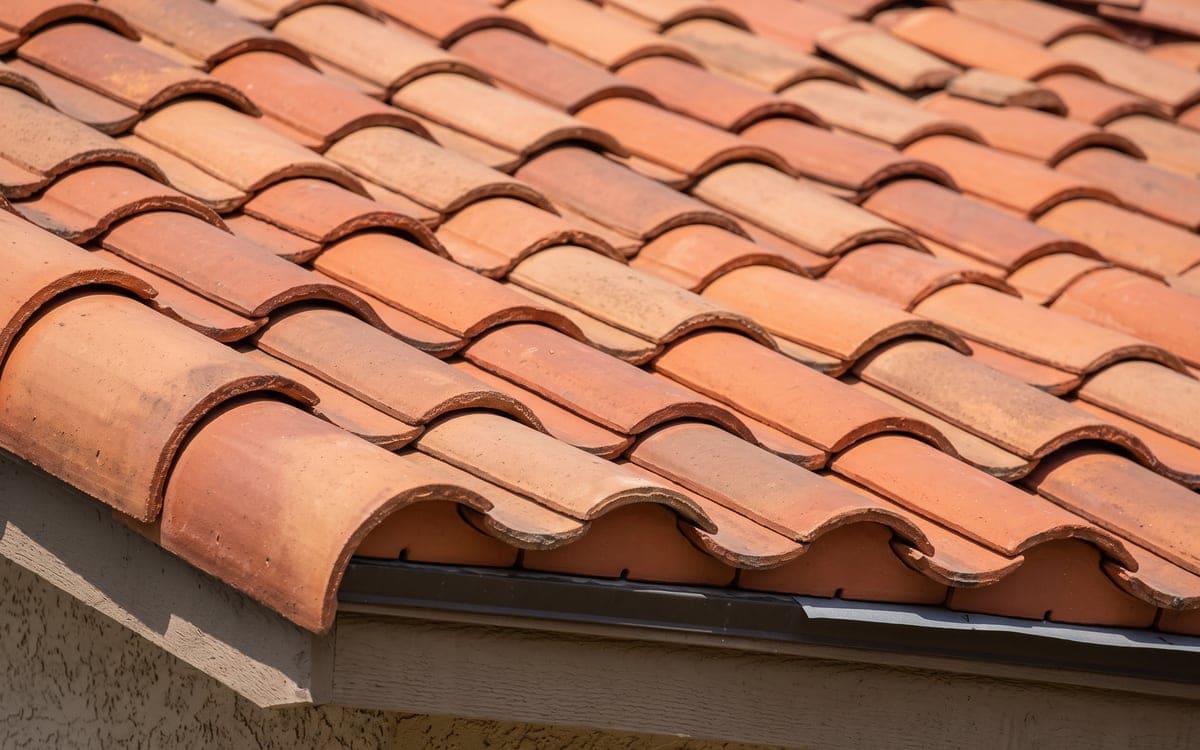
The deck and underlayment
Clay and concrete tile goes only over solid sheathing and only on sloped roofs at or above a minimum pitch, with double underlayment required on the lower end of that range, per the 2021 International Residential Code (a model code). The underlayment is a specific product: ASTM D226 Type II, with at least two layers on the lower end of the tile slope range in the TRI Alliance's manual, acting in most cases as a secondary water barrier. New or harvested tiles should not be installed over compromised underlayment. In an Eagle article, the alliance's technical director adds that tiles made since about the mid-1960s are dense enough to be the primary water-shedding layer.
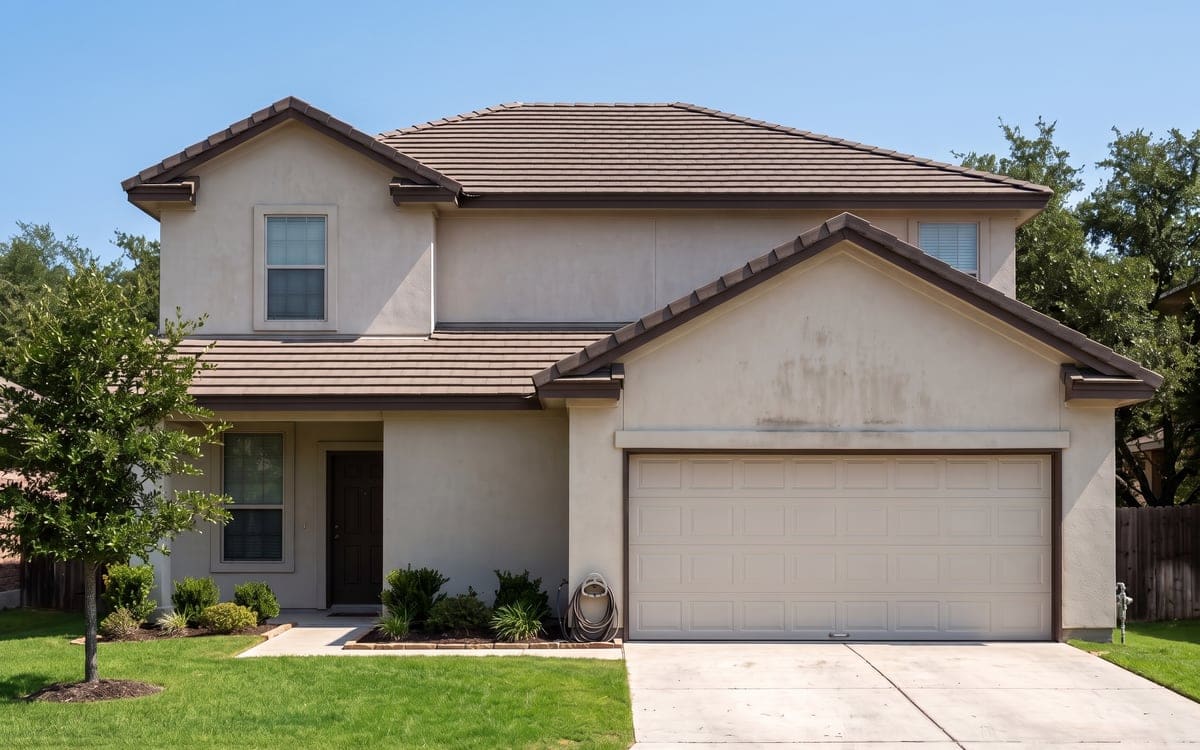
Fastening and wind
Fastening follows the tile maker. The model code (2021 IRC) says tile is applied per the manufacturer's instructions, perimeter tiles need at least one fastener each, and where the design wind speed exceeds 130 mph the maker's attachment instructions apply. On post-storm checks, the TRI Alliance notes that lifting one or more tiles 2 inches does not determine whether a tile or roof is compliant to the building codes.
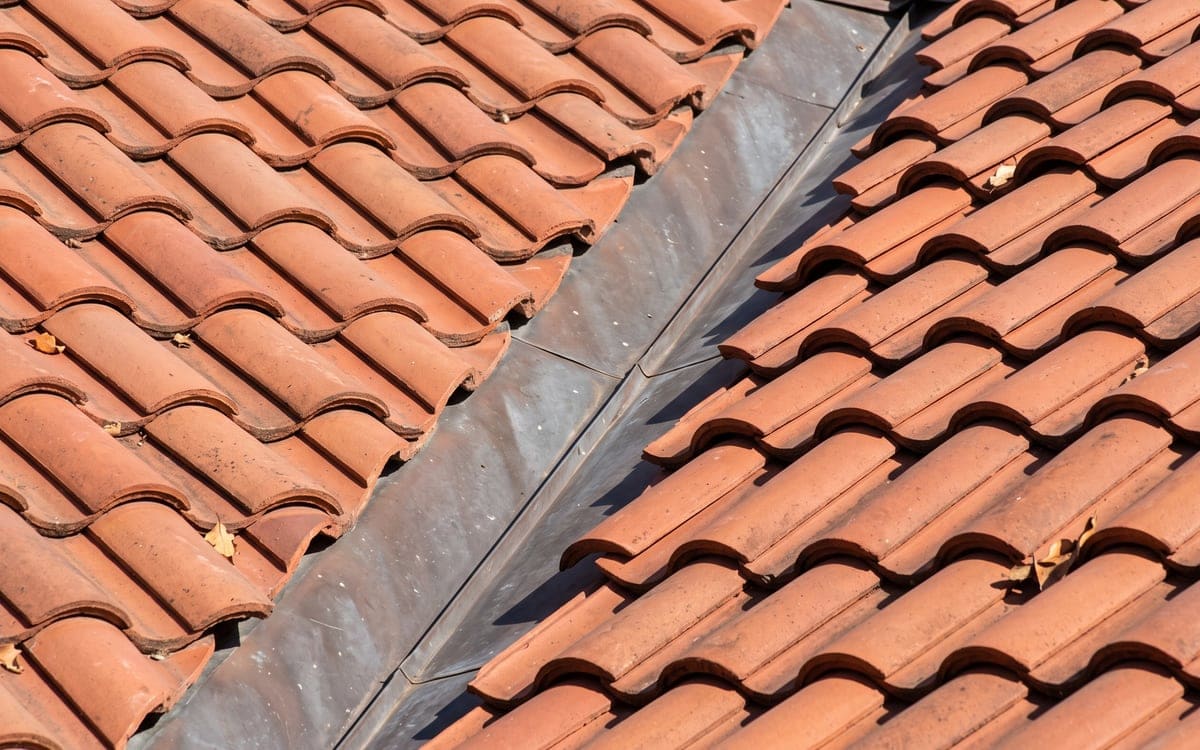
Flashing at valleys and penetrations
The water work on a tile roof is at the valleys, the walls and the penetrations. Under the 2021 IRC, flashing on a tile roof is at least 0.019 inch corrosion-resistant metal, with valley flashing extending at least 11 inches each way and a splash diverter rib at least 1 inch high. The TRI manual goes a step further: valley flashing 12 inches each way, wall trays with a 6-inch trough, and both deck and tile flashing at every pipe, and in a separate brief that every penetration needs both deck and tile flashing, and the attachment of any accessory directly to an individual tile is prohibited.
Broken tiles and how they are replaced
A tile roof is made up of thousands of individual tiles that may be safely removed and replaced without impacting the roof system, per the TRI Alliance, as long as replacement tiles properly interlock and seat with the existing ones, or the fit can lead to leaks and breakage. When the original is no longer made, harvest and repair pulls tiles from an inconspicuous area to replace damaged street-facing tiles, and the repaired tiles usually will not match because of natural aging. The larger version of that work is a lift and relay: Eagle describes it as careful removal of existing concrete tiles, typically with the underlayment and most flashings replaced, then the same tiles re-installed, with some tiles possibly broken in the process.
Weight and the structure
Tile is heavier than shingles, but many homes require little or no additional reinforcement to support a tile roof, per the TRI Alliance. The actual load on your rafters depends on the tile itself: installed weight depends on tile size and exposure, and the maker should be consulted for the specific tile. For a switch to tile, San Antonio's re-roof application again asks for an engineer's assessment inspection report.
| What you notice | What our roofer checks | Work it can lead to |
|---|---|---|
| A single cracked or chipped tile | Whether a match is still made and how the next tile seats | Replacing one tile, or a harvest-and-repair from a hidden slope |
| A gap where a tile has slid | The nails or clips above and the underlayment at the gap | Reseating or replacing a tile; checking the underlayment |
| Debris above a valley or vent | The valley metal, splash diverter rib and the flashing | Clearing debris, resetting flashing or valley metal |
| A stain under a chimney, pipe or valley | Deck and tile flashing at the penetration, condition of the underlayment | Reworking flashing or opening a section to replace underlayment |
| Efflorescence on tile faces | Whether the deposit is only a surface deposit | Leaving a cosmetic deposit alone |
Replace a few tiles, relay them, or re-roof
Three paths run through a tile roof. The first is tile-level repair: replace a few tiles, reset a valley, and leave the rest alone. The second is a lift and relay, carefully removing the tiles, typically replacing the underlayment and most flashings, then re-installing the same tiles (some can break in the process). The third is a full re-roof with new tile or a change to another material; a change to tile brings in the City's engineer rule. If a stain inside is driving the decision, start with a leak under tile; after hail, see after hail. Panel options sit on metal, and the drivers behind any new roof's price live on what moves the price.