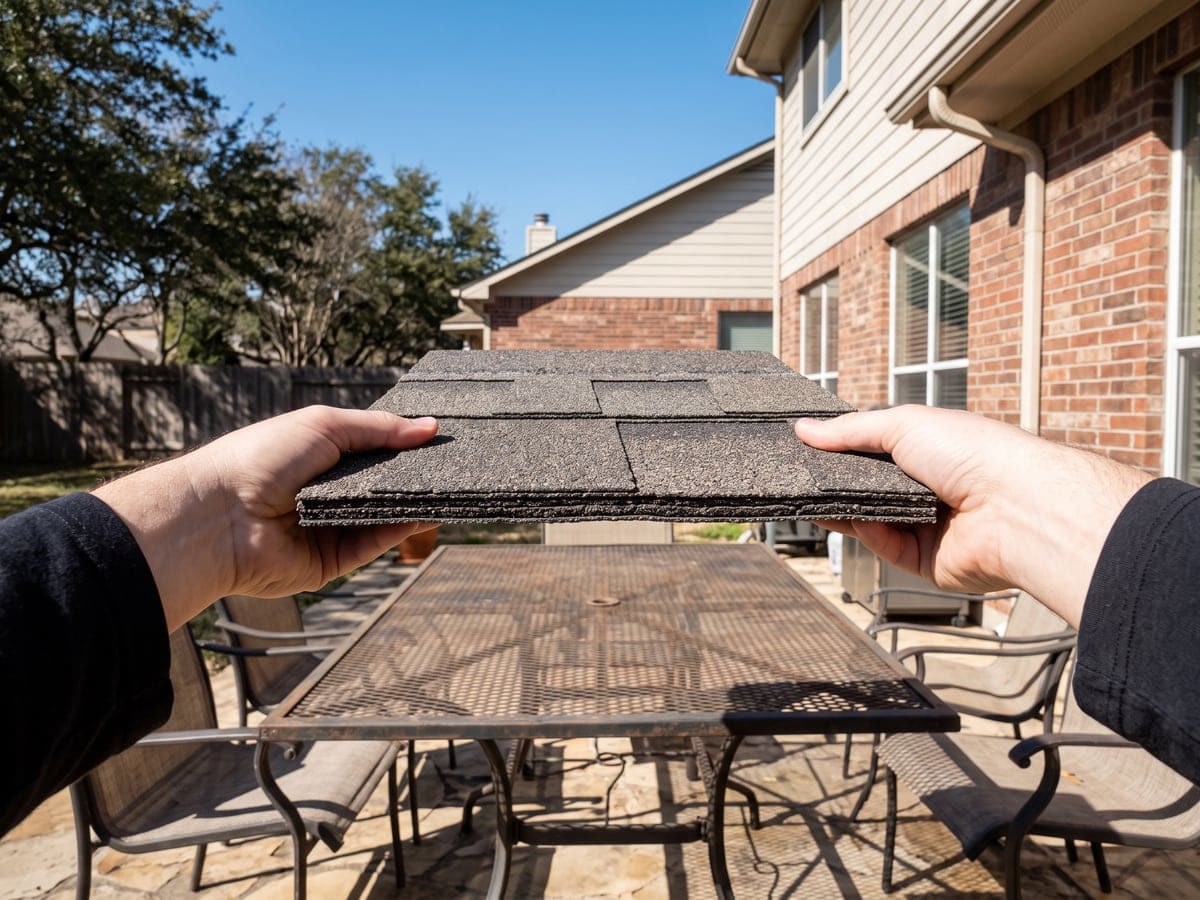
What "impact resistant" means on a label
UL 2218 is the industry's steel-ball test. The shingle makers' association ARMA describes it as steel balls of various diameters dropped from heights ranging from 12 to 20 feet onto a deck of shingles, with the product rated into one of four Classes and Class 4 the highest; NRCA puts tested resistances of 3.53, 7.35, 13.56 and 23.71 foot-pounds on Classes I to IV.
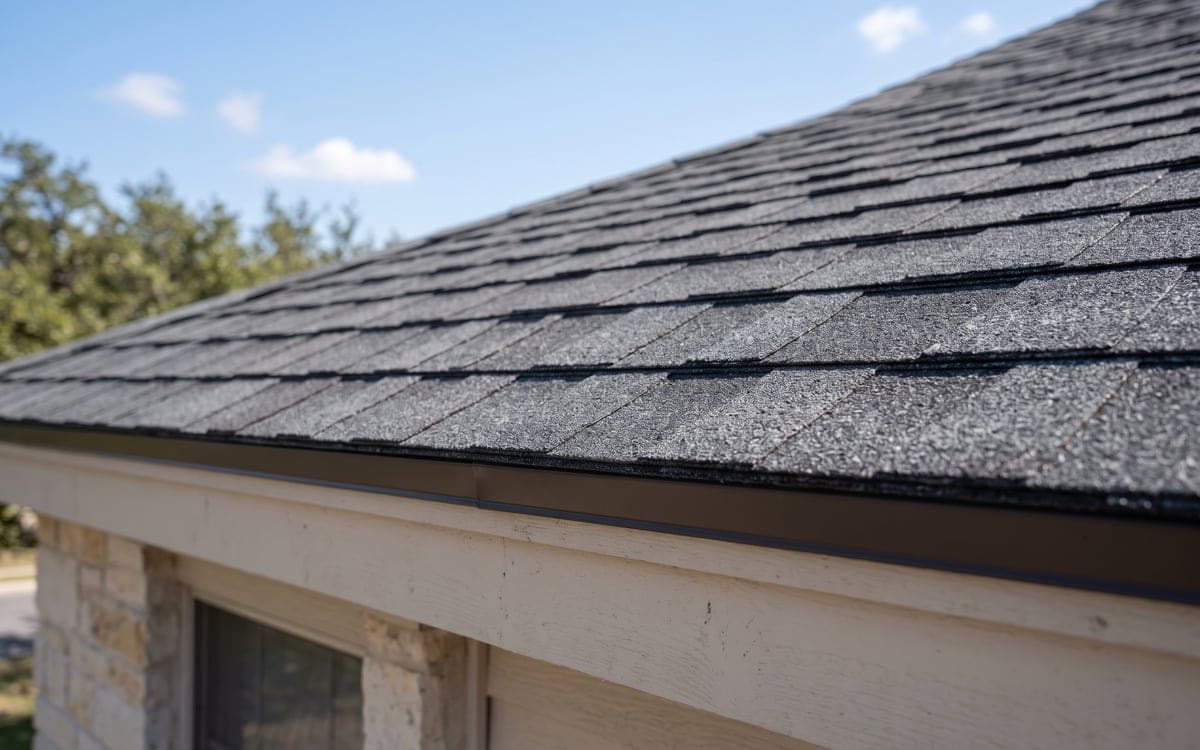
A Class 4 label on a package is a laboratory result on a repeatable rig, not a description of what the shingle will do on a particular roof in a particular storm. The product test standards apply to shingles as manufactured, are done under controlled conditions, and do not fully replicate real-world conditions.
A second test: IBHS rates shingles with lab-made hailstones
Impact-resistant shingles have passed either UL 2218, which uses steel balls, or FM 4473, which uses ice balls, with test projectiles from 1 1/4 inches for Class 1 to 2 inches for Class 4, IBHS researchers write in the roofing trade's magazine; and neither test accurately replicates the type and severity of damage found on roofs after hailstorms, because both standards were developed before the material properties of natural hail were known.
Two ways shingles are rated for impact
The steel-ball test behind Class 4, and the IBHS lab-hailstone ratings.
UL 2218
- Steel balls dropped from 12 to 20 feet
- Rated Class 1 to Class 4
- Class 4 is the highest
IBHS ratings
- Laboratory-made hailstones since 2019
- None of the 24 products tested in 2025 rated Excellent
Sources: Asphalt Roofing Manufacturers Association (ARMA); IBHS, 2025 hail impact-resistant shingle ratings.
In a November 2025 release, IBHS described its own answer: since 2019 it has rated hail impact-resistant shingles using laboratory-made hailstones, which it says gives a more realistic measure of damage than traditional steel balls, and in 2025 none of the 24 products tested earned an Excellent rating. The IBHS ratings are a second laboratory label on the shingle.
What lab ratings do not promise
Not all shingles labeled impact resistant perform equally, IBHS writes in the same article. On wind resistance, ARMA writes that most wind-resistant shingles depend on the bond of a factory-applied self-sealing adhesive for the majority of their wind-resistant strength, with others depending on integral locking tabs, and both should meet current code wind requirements.
The hail risk is wider than any one roof: hail can occur with any strong thunderstorm, which means hail is a threat to roofs throughout the U.S., especially east of the Rocky Mountains, and all asphalt shingles when first installed should offer some protection against hailstone impacts. The reader's question is whether a specific product's lab grades line up with the roof going on the house, not whether the label stops hail.
Codes do not require it
Impact resistance is a choice, not a code requirement. ARMA writes it in one sentence: although not required by the building codes, the ability to resist damage from impacts is of interest to many homeowners and building owners.
Wind resistance, by contrast, is in the model code. NRCA writes in a 2021 column that ASTM D7158 classifies shingles with factory self-sealing strips into Class D, G and H, rated for basic wind speeds of 115, 150 and 190 mph, and the codes require this classification for those shingles. ARMA names the other wind test: ASTM D3161 (fan-induced method), where Class F is the highest rating. A shingle that is both wind rated and impact rated carries both labels on the same bundle.
Texas law and HOAs
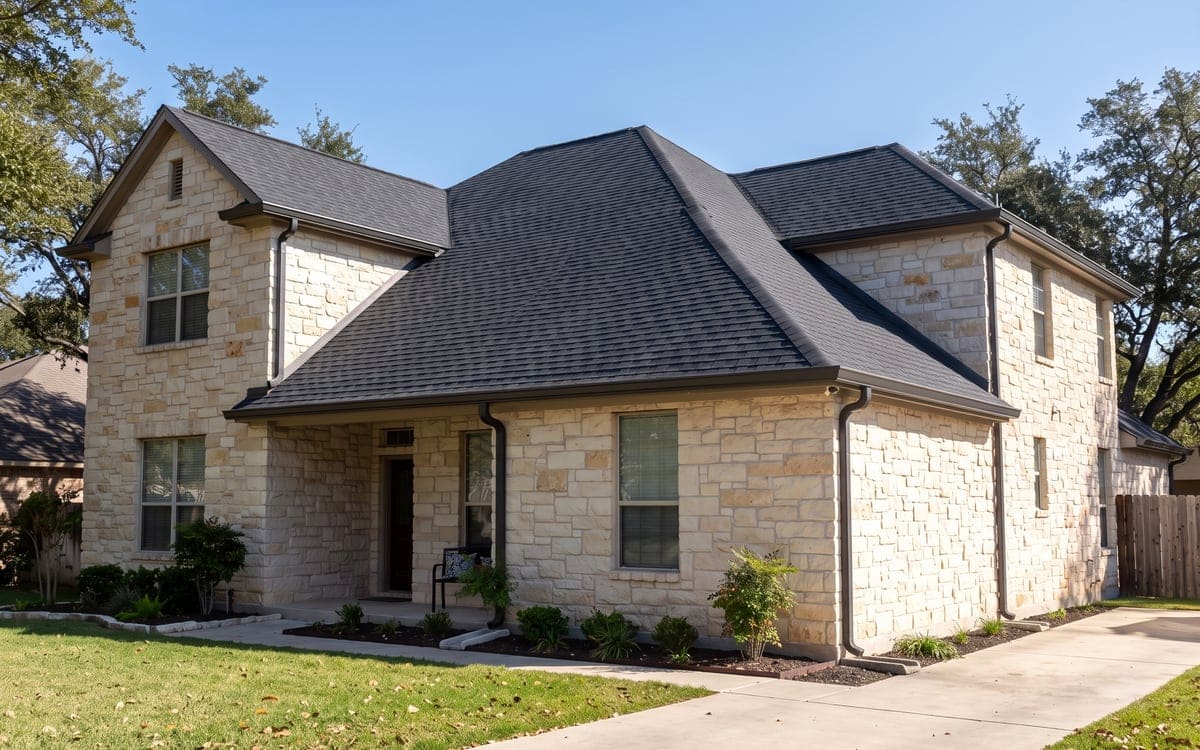
Section 202.011 of the Texas Property Code says a property owners' association may not include or enforce a provision that prohibits or restricts a property owner otherwise authorized to install shingles from installing shingles that are designed to be wind and hail resistant, to give heating and cooling efficiencies greater than those provided by customary composite shingles, or to generate solar power. The statute applies only when those shingles resemble the shingles used or otherwise authorized for use on property in the subdivision, are more durable than and of equal or superior quality to the authorized shingles, and match the aesthetics of the property surrounding the owner's property.
The statute is statewide. The HOA's own rules spell out the authorized shingles for the subdivision; check them or your deed restrictions before choosing a product.
San Antonio's hail sizes, as reports
San Antonio sits in a part of Texas where big hail reaches the ground. NOAA's Storm Events Database holds 363 Bexar County hail reports of 1 inch or larger from 1996 to mid-2026, with 126 of 1.75 inches or larger and 64 of 2 inches or larger. The same file holds 40 reports of 2.5 inches or larger and 20 of 3 inches or larger. Spring is the hail season: of the 363 reports of an inch or larger, 158 came in April, 91 in May and 61 in March.
These are stone sizes on report pages, not a damage threshold for a shingle. Our hail damage article walks the damage side.
| Rating | Where the description comes from | How it is tested |
|---|---|---|
| UL 2218, Classes I to IV | ARMA and NRCA. | Steel balls dropped from 12 to 20 feet onto a deck of shingles; Class 4 is the highest, matched to 23.71 foot-pounds. |
| FM 4473 | IBHS authors in Professional Roofing (2022). | Pure water ice balls; test projectiles from 1 1/4 inches (Class 1) to 2 inches (Class 4). |
| IBHS impact ratings | IBHS (news release, November 2025). | Laboratory-made hailstones since 2019; none of 24 products tested in 2025 earned Excellent. |
| ASTM D3161 (wind) | ARMA. | Fan-induced method; Class F is the highest ARMA names. |
| ASTM D7158 (wind) | NRCA (2021 Professional Roofing column). | Factory self-sealing shingles sorted into Classes D, G and H for basic wind speeds of 115, 150 and 190 mph. |
What to think about for a San Antonio roof
The service pages for the next step are roof replacement, roof repair, storm damage roof repair and metal roofing for a non-shingle option; the metal roof vs shingles article walks the choice. An impact rated shingle is a shingle choice; the install still has to be a good install. A roof that already needs work gets looked at the same way, with or without an impact label on the next package.